Which Blood Tests Require Fasting? a 2026 Australian Guide
Learn which blood tests require fasting, how long to fast for glucose and lipid tests, and when to check with your doctor or lab before you test.
Does every blood test for diabetes or cholesterol require an empty stomach? No, and that assumption can cause you to skip breakfast unnecessarily or prepare incorrectly for the test you've booked.
Knowing which blood tests require fasting starts with the exact test name, not just the condition being checked. Fasting glucose, HbA1c and lipid testing have different preparation rules. Your laboratory's written instructions govern the appointment, including how long to fast and what to do if fasting could be unsafe.
Which Blood Tests Need Fasting and Which Do Not
Fasting requirements for common blood tests
| Test | Fasting required? | Typical fasting window | Key note |
|---|---|---|---|
| Fasting plasma glucose | Yes | At least 8 hours, according to Healthdirect's fasting guidance | Plain water only; coffee, tea, milk, gum and lollies don't meet the preparation rules |
| Oral glucose tolerance test | Yes | 8 to 12 hours, according to Melbourne Pathology's collection guidance | Follow the provider's overnight fasting and appointment instructions |
| HbA1c | No | Not applicable | Assesses longer-term glucose levels rather than a fasting baseline |
| Random blood glucose | No | Not applicable | Doesn't require fasting preparation |
| Total and HDL cholesterol, routine screening | Either | Not required for routine screening | A non-fasting sample can be suitable |
| Lipid panel with raised triglycerides or where calculated LDL needs clarification | Yes, when requested for this purpose | Follow the laboratory's specified overnight window | Fasting helps clarify triglycerides and the interpretation of calculated LDL |
The important distinction is fasting glucose versus HbA1c. They may both appear on a diabetes-related request, but they aren't interchangeable tests with identical preparation. A request containing HbA1c alone doesn't automatically mean you must arrive without breakfast.
Similarly, a random glucose test isn't a fasting glucose test performed less carefully. The clinician has requested a different type of measurement, and the result must be interpreted accordingly.
Read the test name, not just the panel name
A panel can contain several measurements with different requirements. If your request includes both HbA1c and fasting glucose, the fasting glucose component still needs its specified preparation, even though HbA1c itself doesn't.
Cholesterol causes another common misunderstanding. Routine cholesterol screening doesn't universally require fasting, but a clinician may specifically request a fasting lipid sample to investigate raised triglycerides or clarify an LDL result. Don't remove that instruction because a previous cholesterol test was non-fasting.
For an oral glucose tolerance test, check the provider's full instructions rather than treating it like a simple blood collection. The appointment schedule and preparation belong together.
Practical rule: A broad label such as metabolic panel or diabetes check isn't enough to decide whether to fast. Look for the individual tests and the written preparation instructions.
Other tests on the same request deserve their own preparation check. If iron markers are included, our guide to iron studies testing can help you understand what's being measured, but the collection laboratory should confirm your appointment requirements.
Before booking, identify the test name in the table, then check it against your request form. If you can't tell whether glucose means fasting glucose or random glucose, ask the ordering clinician to clarify rather than choosing the preparation yourself.
When Fasting Is Unsafe and What to Ask First
Fasting isn't a harmless default for everyone. The safest preparation starts with deciding whether you need a fasting test and whether you can complete it safely.
PathWest's patient instructions advise people with diabetes to seek medical advice before fasting and caution against fasting longer than 16 hours. Those warnings matter more than trying to achieve an especially long fast.
Use this checklist before committing to an appointment.
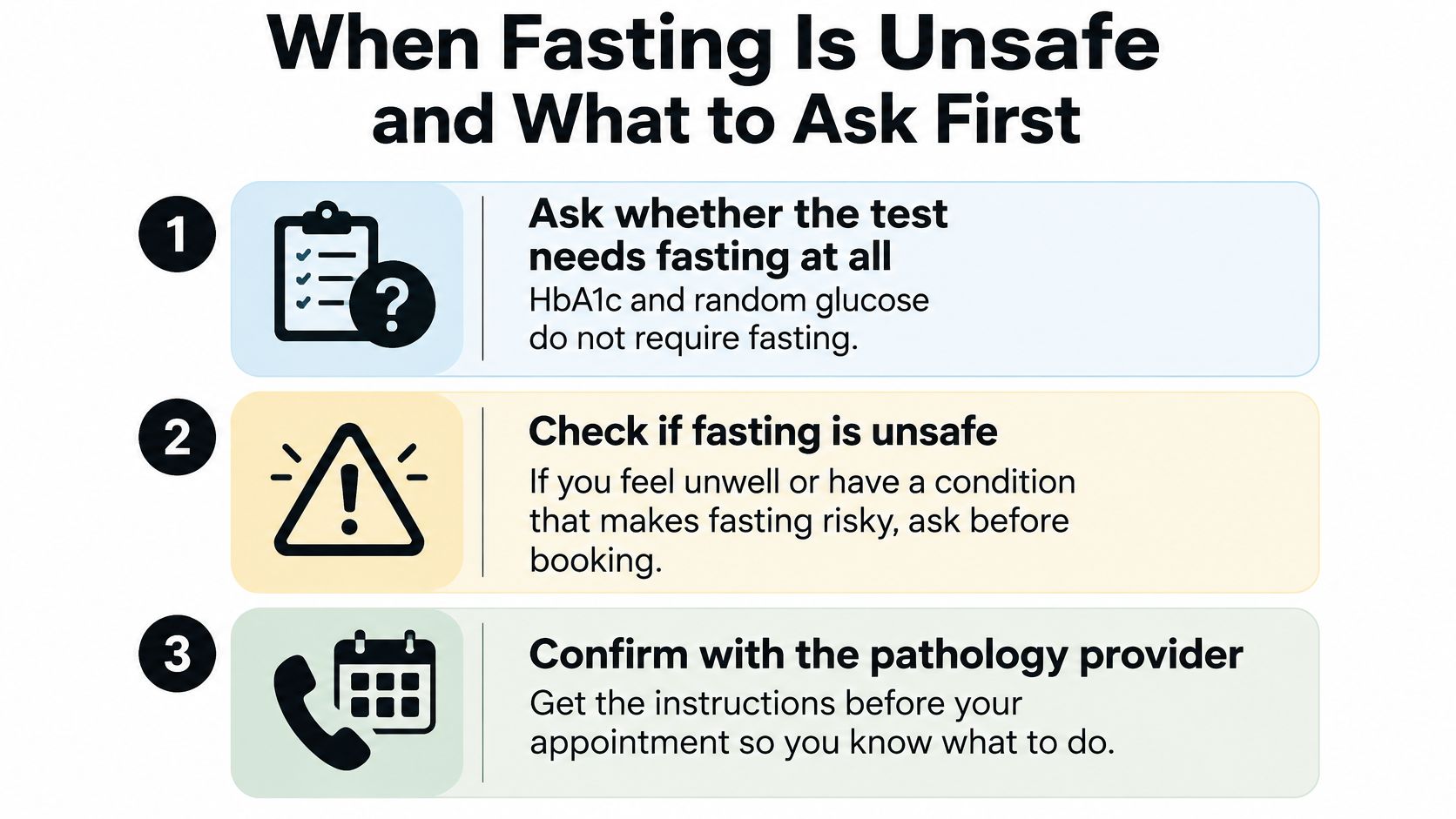
Questions to ask before booking
- Is a fasting measurement necessary? If going without food is unsafe or impractical, ask whether a non-fasting option would answer the clinical question. Don't substitute a different test yourself.
- How should I manage diabetes medicines? Ask the clinician who manages your treatment for specific instructions about insulin and other glucose-lowering medicines. Never independently withhold them to fit a blood-test appointment.
- What if my medicine needs food? Request a clear plan for the dose and meal timing. Skipping prescribed treatment isn't an appropriate workaround.
- Does pregnancy change my preparation? Confirm the instructions for the exact test ordered during pregnancy. Don't copy another person's fasting plan.
- What if the test is for a child? Obtain individual advice before imposing an adult fasting routine.
- What should I tell the collector? Mention diabetes, previous fainting and any difficulty completing the preparation before collection begins.
Hydration belongs in the safety plan
Plain water is allowed during standard fasting blood-test preparation. Keeping hydrated can make veins easier to access and may reduce the likelihood of fainting, so fasting shouldn't become an accidental fluid restriction.
Follow any additional instructions about smoking, alcohol and drinks other than water. If you've also received separate instructions to restrict fluids, ask your treating team how those instructions fit with the blood test.
If you become faint or unwell, prioritise safety over completing the fast. Tell collection staff promptly if you're already at the centre, or seek medical advice if you haven't arrived.
A blanket instruction to skip breakfast can overlook medicines, pregnancy, childhood needs and previous fainting. Asking these questions before booking gives your clinician time to arrange an appropriate plan, rather than leaving you to make a treatment decision while hungry on the morning of collection.
How to Prepare for a Fasting Blood Test Step by Step
A successful fast is a planned interval, not just arriving before breakfast. Work backwards from the collection time using the laboratory's written instructions, and leave yourself time to resolve questions before the evening meal.
Keep the request form and any separate collection instructions together. An emailed preparation sheet may contain details that aren't obvious from the test names alone.
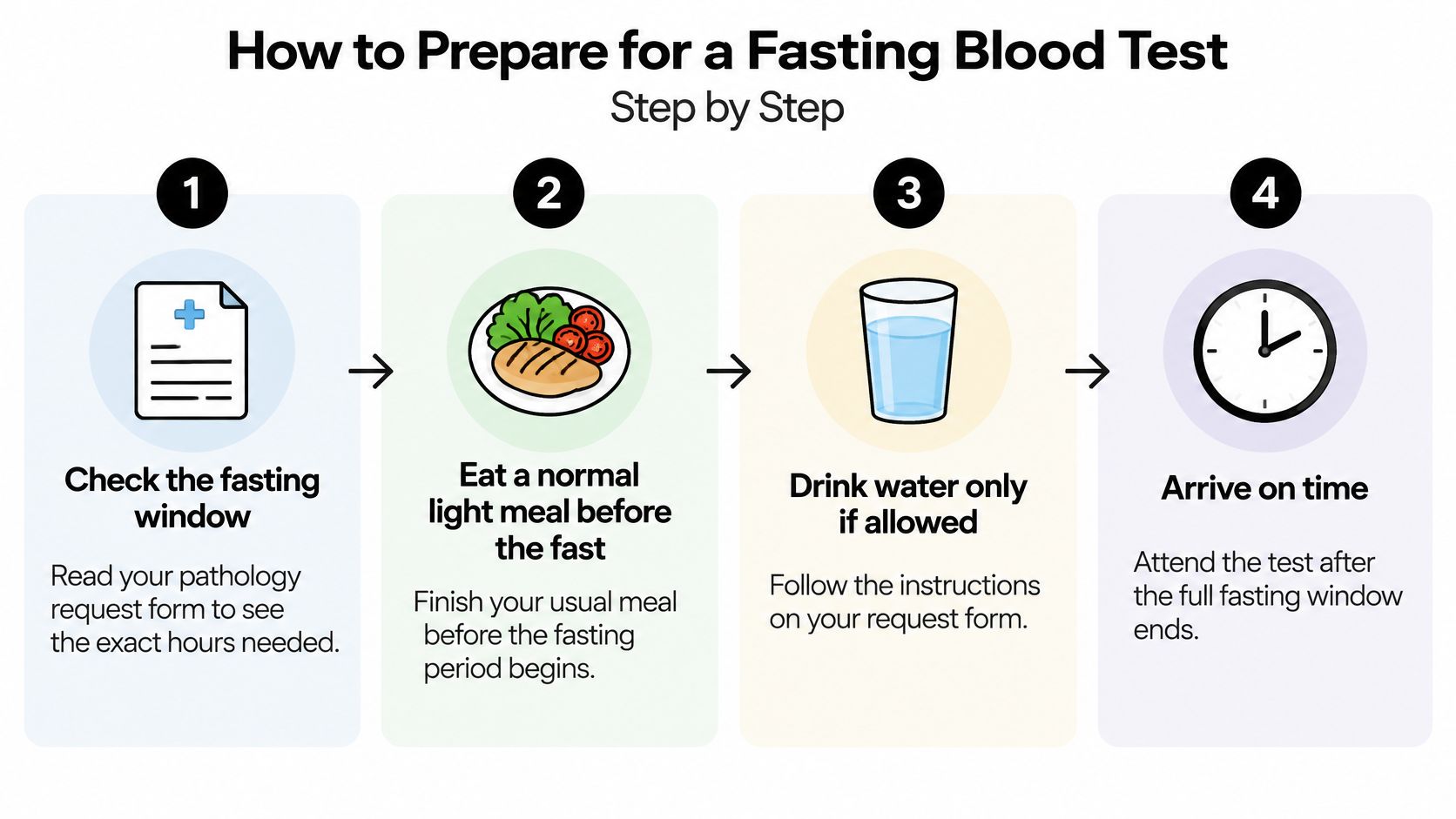
Use this visual reminder alongside the instructions for your actual appointment.
Plan the evening and morning together
Check the exact fasting window. Read the request form and the collecting laboratory's preparation sheet before choosing when to stop eating. If they appear inconsistent, contact the laboratory rather than selecting whichever instruction is easiest.
Have your usual evening meal before the fast starts. A normal, light dinner is a practical choice unless your test instructions specify something different. Don't deliberately eat an unusually large meal to compensate for missing breakfast.
Record when you finish eating. Start counting from your last food or drink other than plain water, not from bedtime. Include any late snack when working out whether you've completed the required preparation.
Keep plain water available. Drink normally through the fasting period rather than avoiding all fluids. Put a water bottle beside your bag so you don't automatically reach for your usual morning coffee.
Follow the medicine plan agreed with your clinician. Sort this out before test day, particularly if a medicine affects glucose or needs food. Don't improvise by delaying or skipping prescribed doses.
Arrive with the information the collector needs. Bring your request form and explain when you last ate, whether you've had anything besides water, and whether you've had problems with blood collection before. If the appointment is delayed, tell staff that you're fasting rather than extending the fast.
Check that the testing is complete before eating. Once staff confirm you've finished and no further restrictions apply, you can eat normally. Bringing a snack makes this easier if you have travel or other appointments afterwards.
Check timing as well as food restrictions
Fasting is only part of preparation. Some requests also carry collection-time instructions, so a correctly completed fast doesn't automatically mean any appointment time is suitable.
For example, someone arranging hormone investigations should check the timing requirements attached to the specific request. Our Australian guide to cortisol testing explains that testing topic, while your laboratory's instructions remain the practical guide for collection.
A well-prepared patient can tell the collector what they last ate or drank and when. You don't need to guess whether you've fasted long enough.
Before leaving home, check that you have the form, know your last eating time, and have followed the agreed medicine plan. Those details are more useful than just saying you haven't had breakfast.
Fasting Mistakes That Quietly Spoil a Sample
A fasting instruction isn't just a request to avoid a full meal. Small departures can mean the sample no longer meets the conditions the clinician requested, even when you feel you've barely consumed anything.
Small exceptions still count
- Black coffee is basically water. It isn't part of a water-only fast, even without milk or sugar. Save it until staff confirm your testing is finished.
- A splash of milk won't matter. Milk in tea or coffee breaks water-only preparation. The size of the splash doesn't make it an approved exception.
- Sugar-free gum must be fine. Fasting instructions can exclude gum as well as lollies. Don't use the sugar-free label as permission to ignore the collection rules.
- Juice is lighter than breakfast. Juice still isn't water. Choosing a drink instead of solid food doesn't preserve a fasting sample.
- Longer fasting must give a better result. Extending the fast beyond the requested window isn't an upgrade. It can leave you feeling unwell without providing the preparation the laboratory asked for.
Tell the collector before the needle
If you've eaten, had coffee or otherwise departed from the instructions, say so before collection. Describe what you consumed and when, rather than deciding for yourself that it was too small to count.
The collector can check whether the sample can proceed with the correct fasting status recorded or whether you need another appointment. That decision may differ between a routine lipid request and a test specifically requiring fasting glucose.
If preparation changes, disclose it. A correctly labelled non-fasting sample or a rebooked appointment is preferable to a sample incorrectly recorded as fasting.
Don't restart the clock and create a much longer fast without checking. The useful response to a slip is an honest conversation, not an attempt to conceal or compensate for it.
Why Food Changes Some Results and Not Others
Food changes what's circulating in your blood, but not every test measures the same thing. A fasting glucose test asks about your glucose level without the immediate influence of a meal; HbA1c asks a longer-term question.
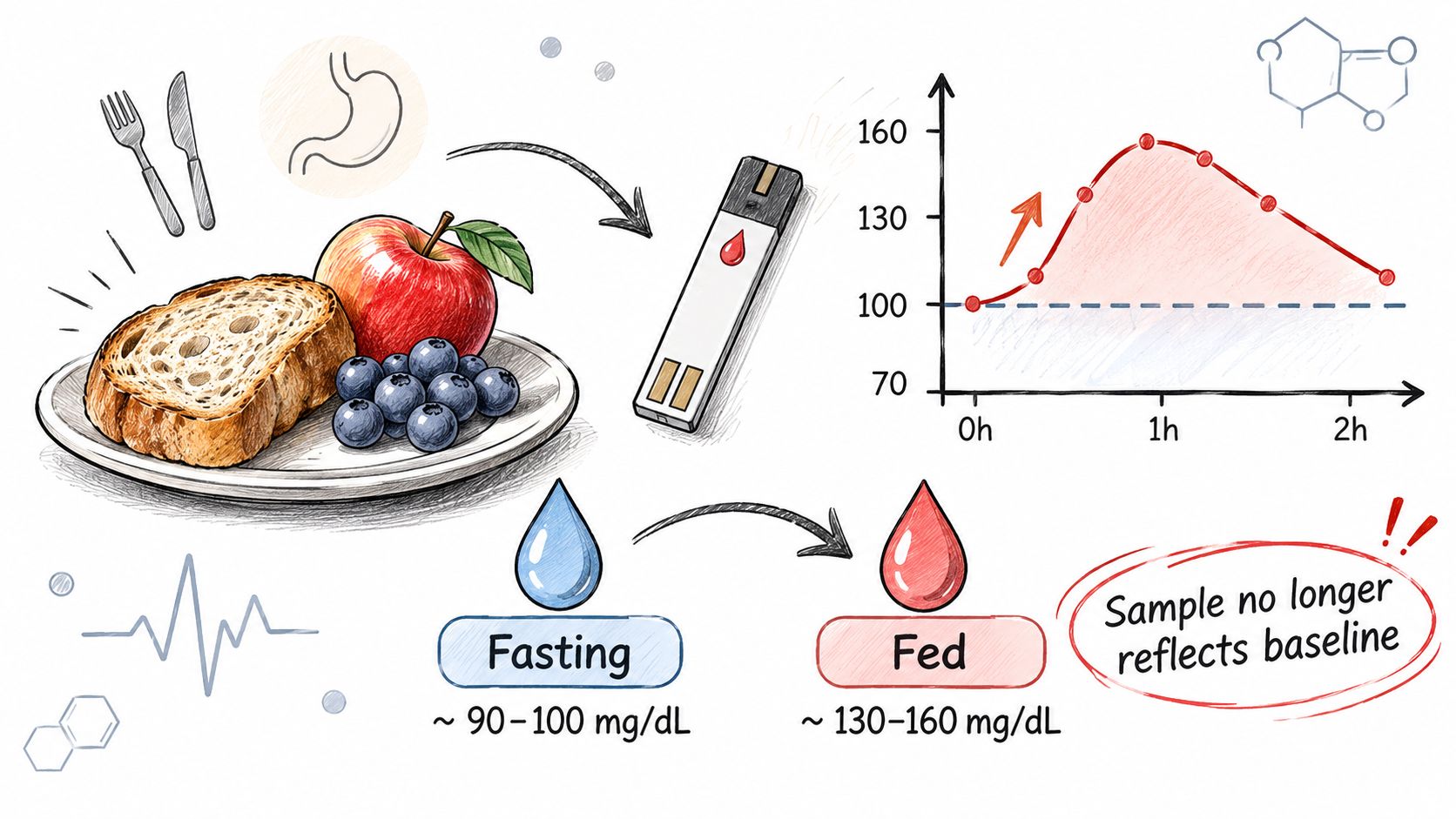
The difference between a fasting and fed state helps explain why preparation matters.
Glucose is a snapshot, not the whole story
After carbohydrate intake, circulating glucose rises and the body releases insulin. A glucose sample collected after eating therefore doesn't represent the same resting state as a fasting sample.
Think of it as photographing a kitchen during dinner preparation rather than before anyone starts cooking. Both photographs are real, but they answer different questions about what's happening.
HbA1c is different because it reflects longer-term glucose exposure. That's why eating before an HbA1c test doesn't create the same preparation problem as eating before a fasting glucose test.
Triglycerides can affect calculated LDL
A fatty meal can temporarily raise triglycerides, potentially making a high result harder to interpret. Routine total and HDL cholesterol assessment can generally use a non-fasting sample, but raised triglycerides, treatment monitoring and calculated LDL may call for fasting preparation.
Australian RACGP guidance identifies 4.5 mmol/L as a practical threshold for repeating non-fasting triglycerides with a fasting sample, because the Friedewald LDL calculation isn't reliable at or above that level, as outlined in Healthdirect's cholesterol and lipid testing information.
This doesn't mean every LDL measurement requires fasting. It means the clinician needs to consider the triglyceride result, the calculation used and the purpose of testing before deciding how to interpret or repeat the panel.
For another explanation of fasting preparation, the following video provides additional context.
Fasting status belongs with the result. When the collector records whether you've fasted, the clinician has important context for interpreting the lipid panel and comparing it with previous measurements.
A non-fasting result isn't automatically a poor-quality result. The key is whether the sample conditions match the question being asked and whether those conditions are accurately recorded.
Why Fasting Instructions Differ Between Labs
Different fasting windows don't necessarily mean someone has given you incorrect advice. A general patient guide may state a minimum, while a particular laboratory sets an overnight window and appointment schedule for its own collection service.
The tests themselves also differ. A fasting glucose request and an oral glucose tolerance test shouldn't be treated as identical appointments just because both involve glucose.
Compare the test as well as the hours
Fasting windows quoted by each source
| Source | Test | Stated fasting window |
|---|---|---|
| Healthdirect Australia's blood glucose guide | Fasting blood glucose | At least 8 hours, water only |
| NSW Health Pathology | Fasting blood glucose | Minimum 8 hours, water only |
| Eastern Health in Victoria | Glucose tolerance test | 12 hours overnight, testing between 8:00 and 10:00 a.m. |
| Melbourne Pathology | Cholesterol, lipid and fasting glucose | Follow its specified fasting window for the request |
| Melbourne Pathology | Glucose tolerance test | Follow its overnight glucose tolerance preparation |
| PathWest | General fasting pathology tests | Follow its overnight fasting instructions and maximum-duration warning |
These are test-specific instructions, not competing universal rules. Eastern Health's scheduled glucose tolerance preparation, for example, shouldn't be used to infer the required appointment time for an unrelated blood test at another laboratory.
Nor should you assume that differences arise from the collection tube alone. The available patient instructions establish what preparation each service requests; they don't establish a single technical explanation for every difference between laboratories.
Resolve conflicting instructions before attending
For a combined request, check whether an individual test adds a preparation requirement that the broader panel name doesn't reveal. Our complete blood panel guide can help you understand panel terminology, but it doesn't replace the collecting laboratory's instructions.
If your clinician's form and the laboratory's preparation sheet disagree, don't choose the longer fast. Contact the laboratory and, where necessary, the ordering clinician so they can reconcile the instructions.
The written preparation confirmed for your actual test and collection service is the rule to follow. A general online range is useful for planning, but it can't settle an unresolved instruction on your request.
Confirm Your Fasting Instructions Before You Test
Before the appointment, turn the request into a clear decision: Is fasting required for this exact collection, and has the laboratory confirmed the preparation? Don't leave an unclear glucose or lipid request unresolved until you're standing at reception.
Read the individual test names, not just the heading on the order. If the preparation field is blank, that's a reason to ask, not evidence that fasting is either necessary or unnecessary.
Get an answer you can act on
When contacting the laboratory, have your request form available. Ask them to confirm the fasting duration, whether the appointment needs a particular time, and any separate collection instructions.
A useful question is: My request includes these tests, and this is the preparation I've received. Can you confirm what I need to do for collection at your centre?
Keep medicine decisions with your treating clinician. Collection staff can clarify laboratory preparation, but your individual treatment plan needs advice from the clinician responsible for it.
- Keep the answer accessible. Save the written instructions with your request form so you can check them before the fast begins.
- Flag unresolved safety concerns. Don't proceed on guesswork if you still need a plan for diabetes medicines or medicines taken with food.
- Allow time to reschedule. If fasting is required but you can't confirm or safely complete the preparation, arrange another appointment rather than forcing the collection.
With our online ordering process, you can obtain private blood tests without arranging a prior GP referral or GP visit. That access doesn't remove the need to check preparation: customers across Australia still attend a nearby NATA-accredited collection centre with the appropriate request.
If the instructions are clear and safe for you, follow them. If they're unclear or unsafe, resolve that before testing. Your next action is to open the request form and confirm the collection requirements, not automatically skip your next meal.
Vital iQ Health offers private blood testing online without a prior GP referral or GP visit, with collection available across Australia at nearby NATA-accredited collection centres. Visit Vital iQ Health to arrange your testing, then check the fasting instructions for your selected tests before attending.