Complete Blood Panel Explained: What It Includes and Why
Complete Blood Panel explained: which markers it includes, how panels differ, and what abnormal results do and do not mean.
If a blood panel is called complete, why can it still leave important health questions unanswered? The name sounds like a whole-body assessment, but a blood test measures only the markers selected on the request form. Understanding those markers as signals that need context, rather than a pass or fail score, makes your results much more useful.
What a Complete Blood Panel Actually Means
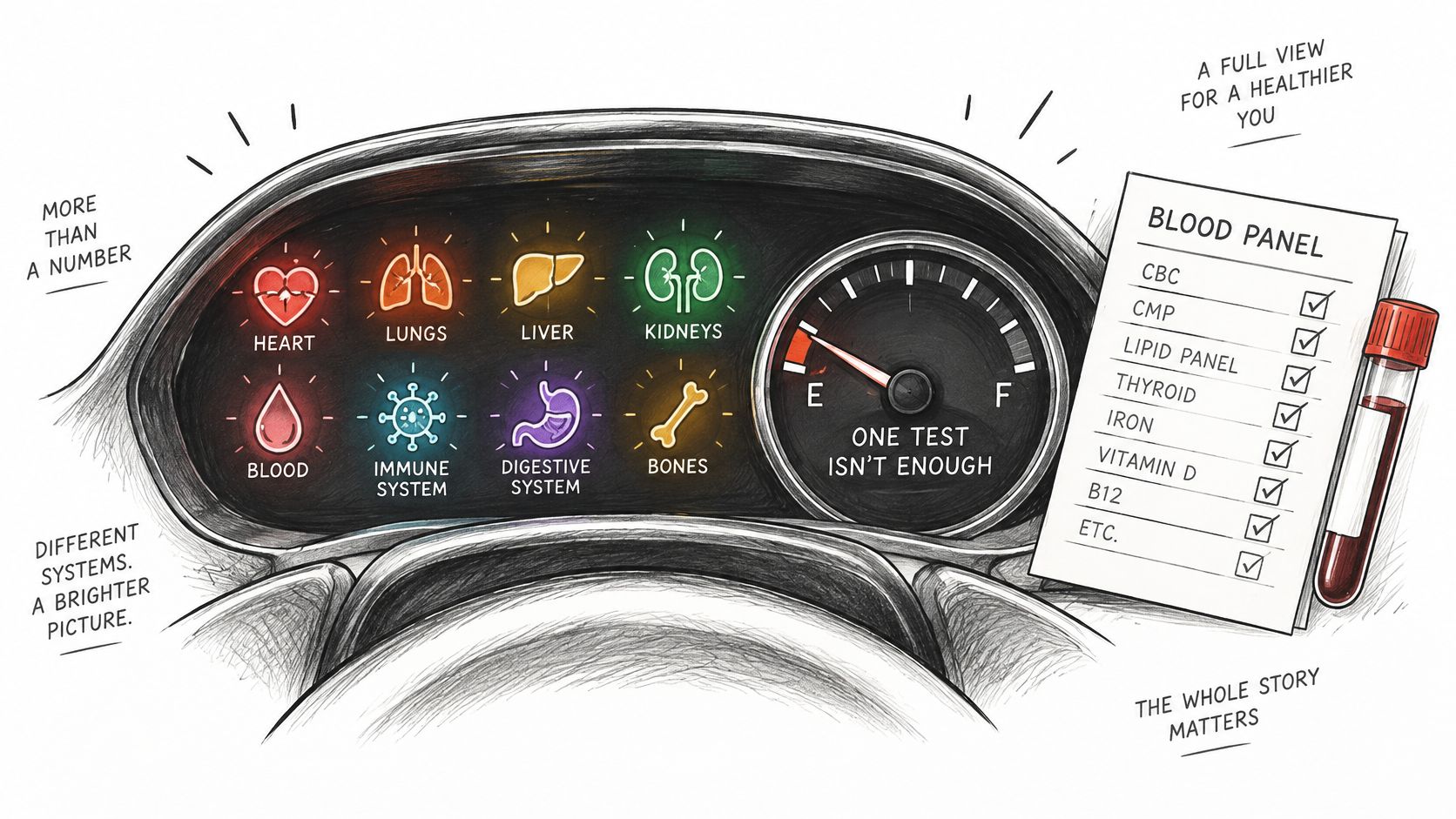
A complete blood panel is a little like a car dashboard. Different indicators tell you about different systems, but even a dashboard without warning lights can't tell you everything about the vehicle.
Say you book blood tests because you're tired. You might expect complete to mean that your blood cells, iron, thyroid, liver and kidneys will all be checked. In practice, complete blood panel has no single fixed meaning, so the actual test list matters more than the package name.
Start with the blood count
In Australia, the core test is usually a full blood count, or FBC, also called a complete blood count or CBC. It measures red blood cells, white blood cells and platelets. These measurements help a clinician investigate problems involving oxygen transport, immune activity and blood clotting.
In the Australian Institute of Health and Welfare's general practice activity report, FBCs accounted for 3,422 of 23,872 recorded pathology test orders, or 14.3%, making them the largest haematology category and the most frequently ordered pathology test type reported. That describes how often clinicians ordered the test, not how accurately it diagnosed a particular condition.
Additional tests answer different questions
A broader panel may add kidney markers, electrolytes, liver tests, glucose, lipids or thyroid tests. Those aren't extra features of the FBC itself. They're separate investigations grouped together for convenience or a particular clinical purpose.
Before collection, check the actual names on the request. If the question is about thyroid function, for example, a blood-cell count alone won't answer it.
Practical rule: Complete describes the selection of tests, not how completely your health has been assessed.
The Core Markers in a Full Blood Count
An FBC report contains related measurements, not independent verdicts. Start with what each marker measures, then look at whether the results form a consistent pattern.
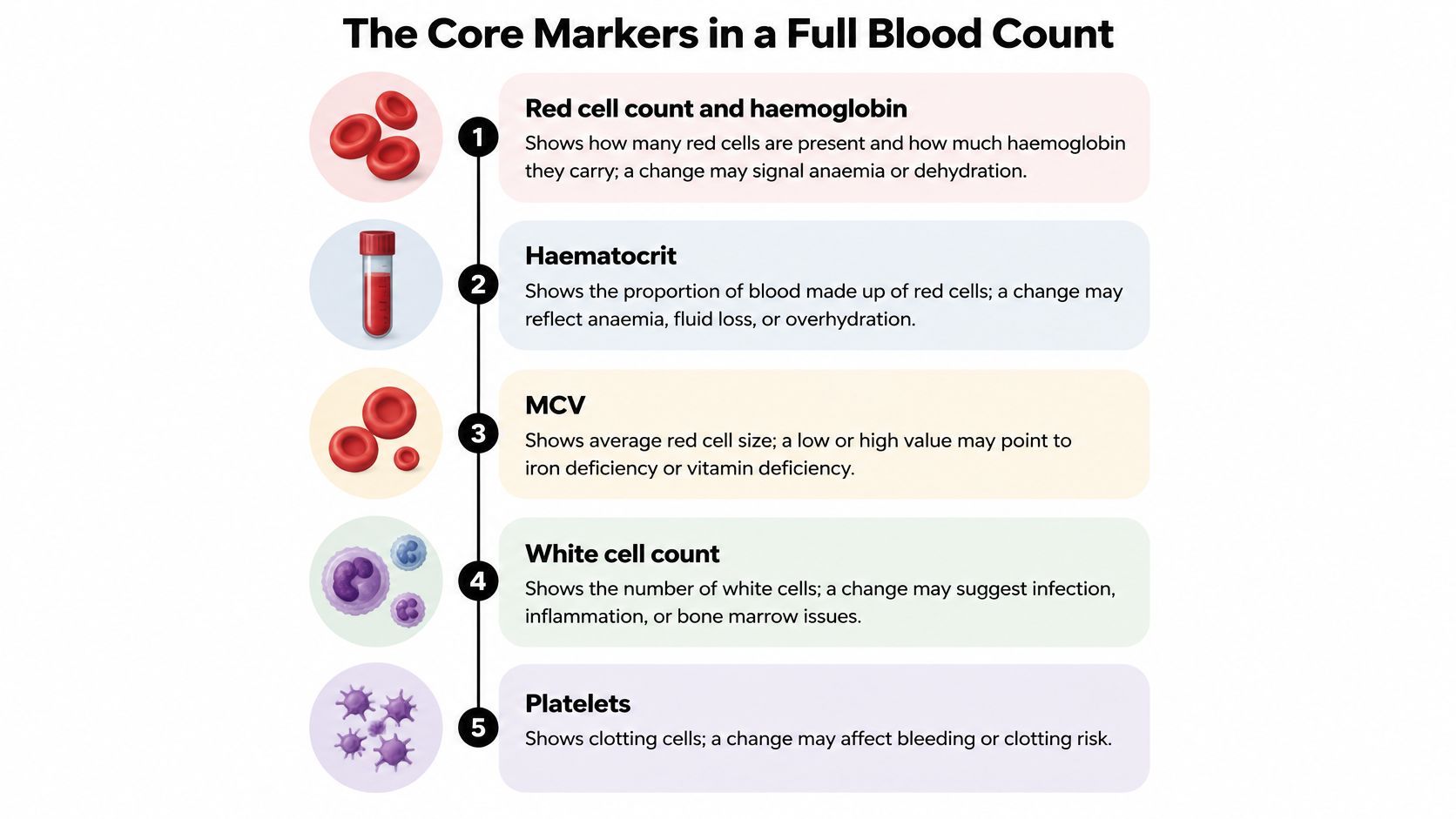
The Medicare Benefits Schedule definition of an FBC includes erythrocyte count, haemoglobin, haematocrit, red-cell indices, platelet count, leucocyte count and a differential from the same specimen; a blood-film assessment may also be performed. A blood film lets laboratory staff examine the cells' appearance, rather than relying only on automated counts.
Red cells and oxygen transport
Red cell count tells you how many erythrocytes are present. Haemoglobin measures the oxygen-carrying protein inside them, while haematocrit describes the share of blood volume occupied by red cells. These measurements are connected, but they aren't interchangeable.
The red-cell indices add detail. Mean cell volume, or MCV, describes average cell size; red cell distribution width, or RDW, describes how much cell sizes differ. A clinician uses these clues to narrow down possible explanations for an abnormal haemoglobin result.
Core full blood count markers, what they show and what changes may signal
| Marker | What it measures | Low or high may point to |
|---|---|---|
| Haemoglobin | Oxygen-carrying protein in red cells | Low: anaemia, potentially associated with blood loss or iron deficiency |
| Red cell count (erythrocytes) | Number of red cells | Low: anaemia; high: dehydration, smoking-related changes or polycythaemia |
| Haematocrit | Share of blood volume made up of red cells | Low: anaemia; changes can also reflect fluid balance |
| Mean cell volume (MCV) | Average size of red cells | Low: iron deficiency; high: vitamin deficiency or other causes |
| Red cell distribution width (RDW) | Variation in red cell size | High: mixed or developing nutritional deficiency, including iron deficiency |
| White cells (leucocytes) | Number of cells involved in immune activity | High: infection, inflammation or stress; low: some viral infections or medicine effects |
| White cell differential | Breakdown into different white cell types | Patterns may support investigation of infection, inflammation or allergy |
| Platelets | Cell fragments that help blood clot | Low: bleeding risk; high: inflammation or, in some circumstances, clotting risk |
White cells, platelets and the overall pattern
The white cell differential separates neutrophils, lymphocytes, monocytes, eosinophils and basophils. Knowing which group has changed is more informative than reading the total white cell count alone. Even then, a particular pattern doesn't establish the cause without other information.
Platelet counts need similar care. A raised count doesn't automatically mean a clot is forming, and a low count doesn't tell you the cause of bleeding.
The table gives possible patterns, not full adult reference ranges or diagnostic cut-offs. Use the reference interval printed on your own laboratory report, because laboratories and patient groups can have different intervals. Age, sex, pregnancy, medicines and previous results all affect how a clinician interprets the complete picture.
How Panel Tiers Differ in Scope
Panel tiers differ mainly in which questions they can answer, not in quality. An extended panel isn't automatically a better choice than a standalone FBC, just as a thyroid test isn't an upgrade to a kidney test. They measure different things.
The labels below are practical descriptions, not standard Australian package definitions. Always read the included-marker list, particularly when comparing panels with names such as basic, full or advanced.
Panel tiers compared by typical markers, reasons and limits
| Panel tier | Typical markers | Common reason to order | What it cannot show |
|---|---|---|---|
| Full blood count only | FBC with differential and platelets | Investigating anaemia, supporting assessment of infection, monitoring a known blood condition | Kidney, liver, glucose, thyroid or nutrient status |
| Basic screening panel | FBC, electrolytes, urea, creatinine, liver enzymes, glucose or HbA1c, lipids | Selected preventive checks or medicine monitoring | Thyroid function, reproductive hormones, vitamin or iron stores unless included |
| Extended metabolic panel | Basic tests plus selected thyroid tests, ferritin, transferrin saturation and C-reactive protein | Investigating fatigue, weight change or suspected deficiency | Hormone patterns or vitamin levels unless specifically added |
| Targeted hormone or nutrient panel | Selected reproductive hormones, vitamin B12, folate or other indicated nutrients | Specific symptoms, risk factors or a clinician's request | Overall health; some results need collection timing or menstrual-cycle context |
| Custom or self-selected panel | Any selected combination of individual markers | A defined monitoring goal or personal tracking | Clinical context without an appropriate history and review |
Match the scope to the decision
For someone monitoring an established blood condition, an FBC may be exactly what's needed. Adding unrelated hormones wouldn't necessarily improve that monitoring. Conversely, someone with symptoms suggesting a thyroid problem needs the relevant thyroid measurements, not a larger blood count.
A basic chemistry screen can support assessment of kidney function, liver-related changes, blood glucose and cardiovascular risk. It doesn't establish iron stores merely because haemoglobin is included. Extended testing should follow a reason to suspect a particular problem, rather than a desire to collect every available result.
Targeted nutrient and hormone testing is most useful when the result could change care. For example, dietary restriction may justify investigating a particular deficiency, while reproductive symptoms may call for carefully selected hormone tests rather than a general wellness panel.
Preparation follows the selected markers
An FBC alone usually doesn't require fasting. If glucose or lipids are included, check whether the request specifies a fasting sample; not every glucose or lipid assessment requires fasting, and HbA1c doesn't.
Some hormone tests need collection at a particular time of day or stage of the menstrual cycle. Supplements can also affect nutrient measurements or interfere with some assays, so disclose what you take rather than stopping it yourself.
Choose the question first, then the markers. The preparation instructions should follow that selection, not a generic rule for all blood tests.
Reading an Out-of-Range Result Without Panic
A flagged result isn't a diagnosis. A reference interval describes values commonly found in a comparison population, not a sharp boundary between healthy and unhealthy.
Healthdirect's guide to understanding pathology tests explains that results need to be interpreted alongside the reason for testing, age, sex, overall health, lifestyle, medicines and supplements. A value just outside the interval may have a different meaning from a substantial change accompanied by symptoms.
Read the result in its setting
Begin with the marker name, its unit and the laboratory's reference interval. Then compare it with previous results, if available. A stable borderline value and a new, marked change deserve different consideration.
Say an endurance athlete has slightly low haemoglobin after a heavy training period. Training history and fluid balance may be relevant, but neither proves that the finding is harmless. A clinician would consider symptoms, bleeding, diet and previous counts before deciding whether further tests or a repeat sample are appropriate.
A plausible explanation for an abnormal result is a starting point for assessment, not confirmation that nothing is wrong.
Bring the circumstances of collection into the discussion:
- Food and fluids: Note whether you followed fasting instructions and whether you were dehydrated.
- Exercise and illness: Mention recent strenuous training, fever or recovery from an infection.
- Medicines and supplements: Include prescribed medicines, over-the-counter products and sports supplements.
- Personal circumstances: Pregnancy and the collection time can affect interpretation of selected tests.
Sort the next step by severity and pattern
An isolated borderline result may need comparison with an earlier report or a repeat under more consistent conditions. The timing should depend on the marker and clinical situation, not an automatic schedule.
A pattern across related markers deserves clinical review. Low haemoglobin together with altered red-cell indices, for example, gives a different set of clues from a small isolated change.
A potentially critical result or serious symptoms needs prompt action. If the laboratory or clinician contacts you urgently, follow that advice rather than waiting for a routine appointment.
The likelihood of a condition before testing matters too. Testing someone with clear symptoms is different from testing someone without symptoms or risk factors. Broad, low-purpose testing can produce incidental abnormalities, leading to anxiety and further investigations without necessarily improving care.
The useful question isn't whether a result is high or low. It's whether the finding is meaningful enough to change what happens next.
When an FBC Needs Iron and Inflammation Tests
Consider a premenopausal woman with heavy periods and persistent tiredness whose haemoglobin remains within the laboratory interval. If her iron stores are depleted, stopping at the blood count could miss an important explanation. Iron deficiency can develop before anaemia.
The distinction between iron stores and haemoglobin is central to reading a report like this.
Why the companion tests matter
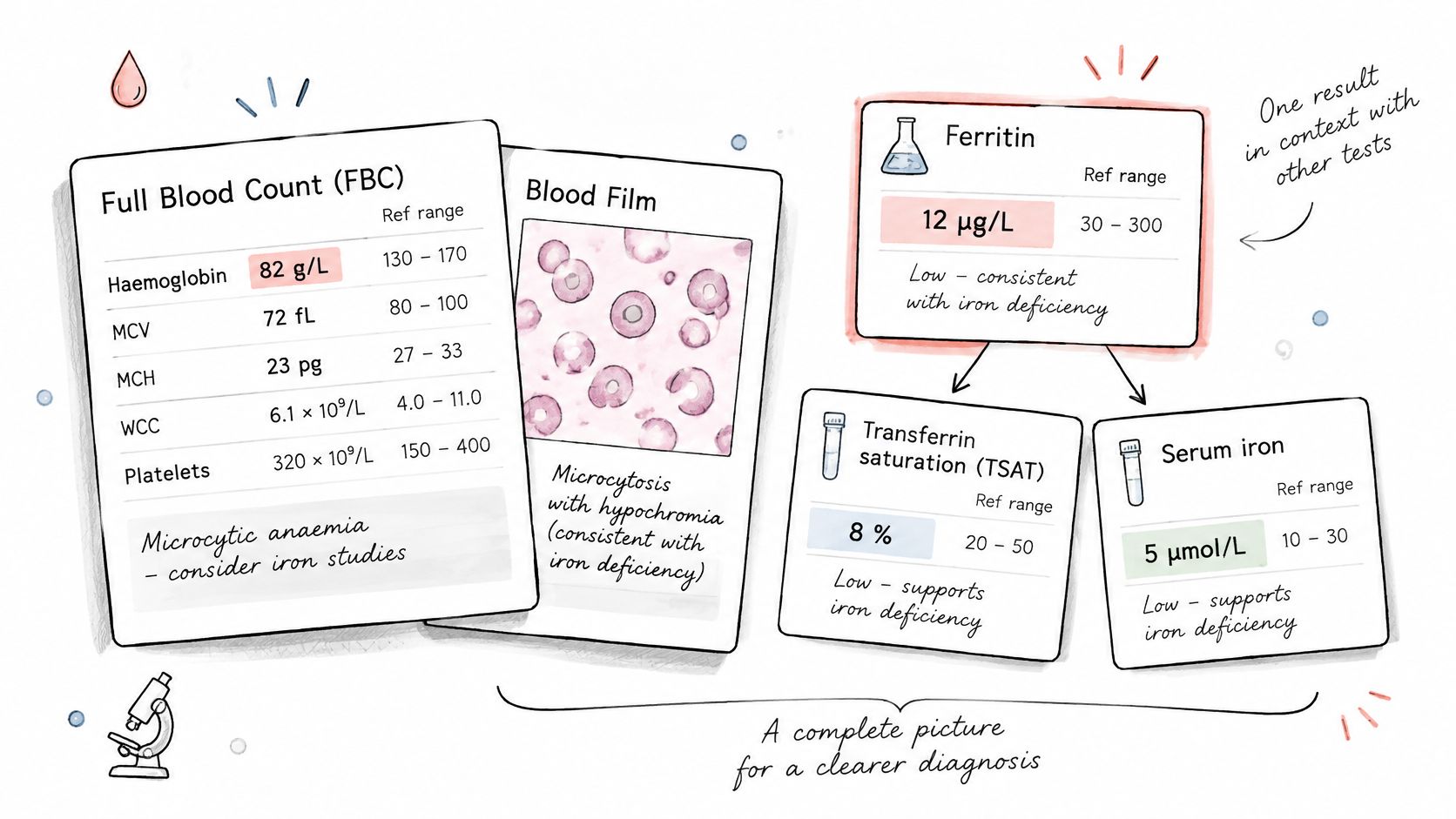
For suspected iron deficiency, RACGP guidance recommends interpreting the full blood examination and blood film with ferritin, transferrin saturation and C-reactive protein, and identifies haemoglobin below 120 g/L in women or 130 g/L in men as anaemia thresholds warranting investigation, while ferritin above 100 µg/L makes absolute iron deficiency less likely.
Ferritin helps assess stored iron. Transferrin saturation adds information about available circulating iron, while C-reactive protein, or CRP, helps identify an inflammatory setting. These measurements answer related but distinct questions.
Inflammation can raise ferritin, making depleted stores harder to recognise. That means an apparently reassuring ferritin result may need closer interpretation when CRP is raised or chronic inflammatory disease is present.
The accompanying video offers another way to approach the topic.
Find the cause, not just the low marker
A low MCV and raised RDW can support suspicion that red-cell production is being restricted by iron availability. They don't replace iron studies, and their absence doesn't reliably exclude early deficiency.
In the heavy-periods scenario, low ferritin would prompt discussion of menstrual blood loss, nutrition and appropriate treatment. Depending on the person's history, a clinician may also need to investigate other sources of blood loss, including the gastrointestinal tract.
Starting iron tablets without a plan can leave the underlying problem unaddressed. Treatment should include a decision about the likely cause, the appropriate replacement approach and how response will be checked.
Follow-up matters: A low iron result is a prompt to explain why iron was lost or wasn't adequately absorbed, not the endpoint of the assessment.
What a Complete Blood Panel Cannot Rule Out
A normal blood panel doesn't prove that you're free of illness. It tells you that the selected measurements didn't show a recognised abnormality at the time of collection.
Blood results can't replace an examination or capture the full meaning of symptoms and family history. Some conditions need different investigations, and some early problems haven't yet changed the markers measured. Repeating the same panel won't necessarily close that gap.
Reassurance needs a clinical question
An Australian study of direct-to-consumer testing found that most online tests examined had low potential clinical utility, with healthy consumers the main target; the reported concerns included false positives, overdiagnosis, non-evidence-based treatment decisions and unnecessary costs. Easy access to a result isn't the same as evidence that the test will improve a particular person's care.
Receiving results before a clinical discussion can also create worry, particularly when automated flags appear without an explanation. The safest response is neither to dismiss every flag nor to treat each one as a disease. Ask what the result means for your symptoms and what action, if any, follows.
Symptoms that shouldn't wait for another panel
Seek medical assessment rather than relying on routine retesting if you have:
- Unexplained bleeding or large bruises, especially if they're new or increasing.
- Fever with a rash or confusion, which may require urgent assessment.
- Chest pain or significant breathlessness, particularly if sudden or severe.
- Rapid, unexplained weight loss, even when routine results are within range.
- A new lump that persists or is growing.
- Fatigue that's getting worse or increasingly limits daily activity.
Sudden chest pain, severe breathlessness, confusion or uncontrolled bleeding warrants emergency care. Weight loss, a persistent lump and worsening fatigue need timely clinical review, though they don't all carry the same urgency.
If normal results don't match how you feel, book a consultation. Bring a symptom timeline, your medicines and supplements, and the actual report. An examination and a more focused investigation may be more useful than another broad panel.
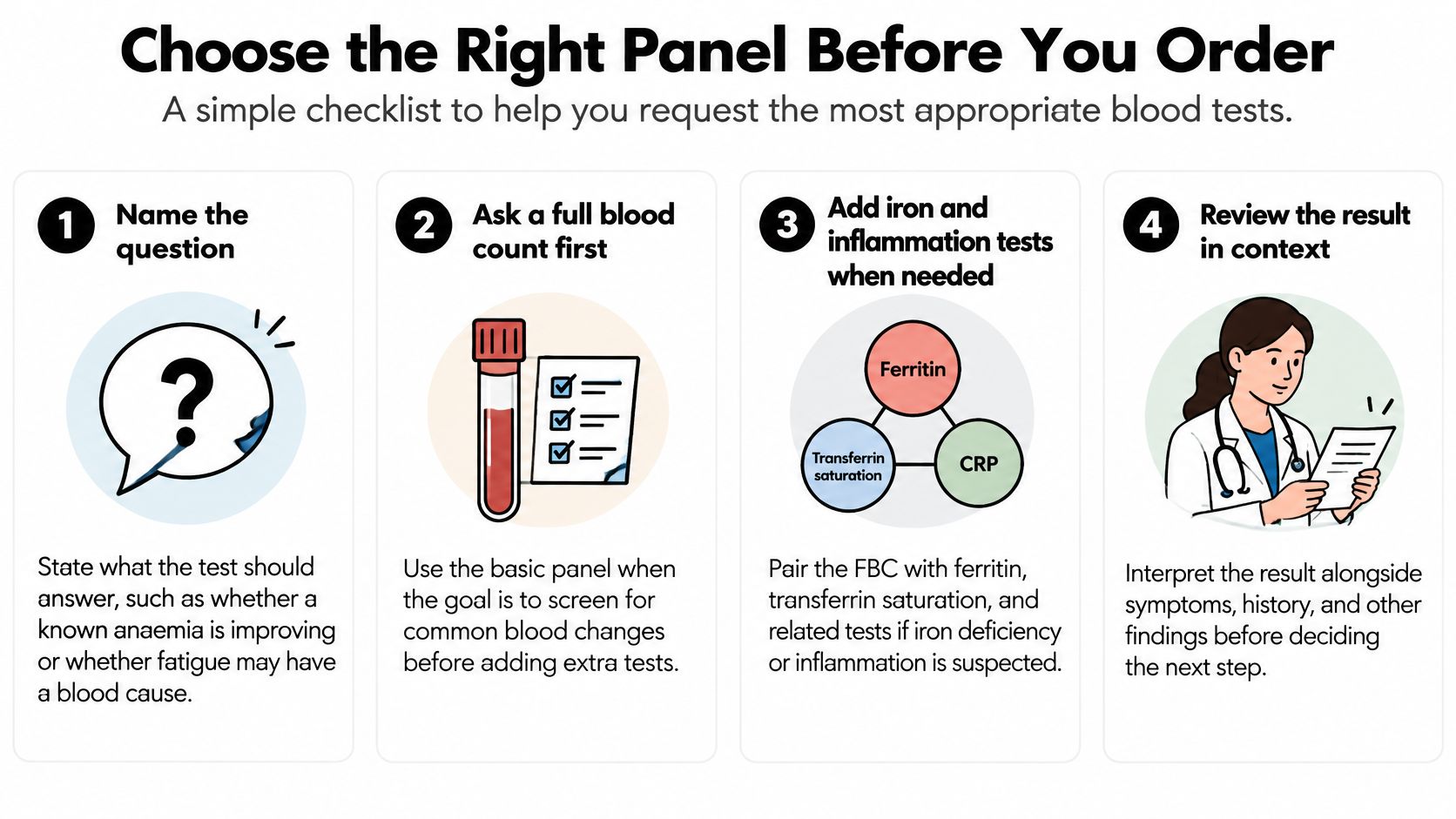
Choose the Right Panel Before You Order
Name the question. Write down what you want to learn, such as whether known anaemia is improving or whether persistent fatigue may have a blood-related cause. A useful question points towards a decision.
Decide whether assessment should come first. If you're unwell or symptoms are changing, ask your GP to assess you before selecting tests. Examination findings may change which investigations are appropriate.
Choose the smallest useful selection. Check the included markers rather than choosing by the package name. Add a test when there's a reason its result could alter your care.
Confirm preparation. Follow the request's fasting instructions, check any hormone timing requirements, and disclose medicines and supplements. Don't stop prescribed treatment without clinical advice.
Arrange the review. Decide who will interpret the results and explain which findings need follow-up. Ask when a repeat would be useful and what symptoms should bring that review forward.
Keep privately ordered results connected to your care. Share the full report with your existing GP, including results within range, so future decisions use the same history.
If you choose private testing
With our service, you can order private blood tests online without a GP referral or prior GP visit. After ordering, you visit a nearby NATA-accredited pathology collection centre for sample collection. Our partnered telehealth GPs can explain your results, answer questions and recommend next steps from home.
Once you've established what you need, our guide to full-body check-up costs can help you consider the practical side of arranging testing. Access without a prior GP appointment doesn't remove the value of clinical review.
The best panel is the one that changes a decision.
Vital iQ Health offers private blood testing with online ordering, accredited sample collection and access to partnered telehealth GPs for results review. Visit Vital iQ Health to explore testing options, match your selection to a clear health question and plan how you'll review the findings.