MCV Blood Test High: What the Result Means and Next Steps
MCV Blood Test High results explained: what the number means, common causes such as B12 and alcohol, and when to see a clinician.

You open your blood test report and find a flag beside MCV, even though you feel well or the other results look normal. Searching for “MCV blood test high” brings up vitamin deficiencies, alcohol and bone marrow conditions, leaving you unsure which explanation applies to you.
A high MCV describes the average size of your red blood cells, not the cause of the change. The useful next step is to put that result beside your symptoms, the rest of your blood count and earlier reports. Buying supplements to correct the flagged number can skip the information needed to choose the right treatment.
MCV Ranges Explained
Mean corpuscular volume (MCV) measures the average volume of your red blood cells, reported in femtolitres (fL). It appears within a full blood examination (FBE), also called a full blood count. The laboratory compares your result with its reference interval and flags values outside that interval.
The following bands describe how to approach a report without treating a particular cut-off as universal.
| MCV result | Typical label | What usually follows |
|---|---|---|
| Below the laboratory's lower limit | Low, or microcytic | Review haemoglobin and consider iron studies |
| Within the laboratory's range | Within range | Interpret alongside symptoms and other results |
| Near or just above the laboratory's upper limit | Borderline to mildly high | Review previous results and consider a repeat FBE |
| Clearly above the laboratory's upper limit | High, or macrocytic | Clinical review, with vitamin, liver and thyroid testing selected as appropriate |
Why the printed reference interval matters
Australian reference points aren't completely uniform: the RACGP review of macrocytosis discusses an upper reference limit of approximately 99–100 fL, while South Australian guidance describes macrocytosis as MCV greater than 90 fL. Those differences are a reason to use the interval printed beside your result rather than a number found online.
Age, pregnancy status and your previous results also affect interpretation. A result just outside the range may need a different response from a clear rise that has developed since earlier testing.
Think of the reference interval as a comparison tool, not a dividing line between healthy and ill. A result within range doesn't explain every symptom, and a flag doesn't establish a disease.
High MCV isn't the same as anaemia
Macrocytosis means red blood cells are larger than expected. Anaemia means haemoglobin is low. You can have macrocytosis with normal haemoglobin, white cells and platelets.
Practical rule: Read the MCV flag beside the haemoglobin result, not instead of it.
Find the laboratory range first, then locate earlier FBE reports. Our guide to interpreting blood test results can help you identify the different parts of the report before discussing them with your clinician.
Common Causes Behind a Raised MCV
Your bone marrow makes red blood cells a little like a factory producing batches of bricks. When essential materials are missing, or production is disrupted, some cells emerge larger than expected. It's a useful analogy, although different causes affect blood cells in different ways.
This diagram illustrates the relationship between cell production and oversized red cells.
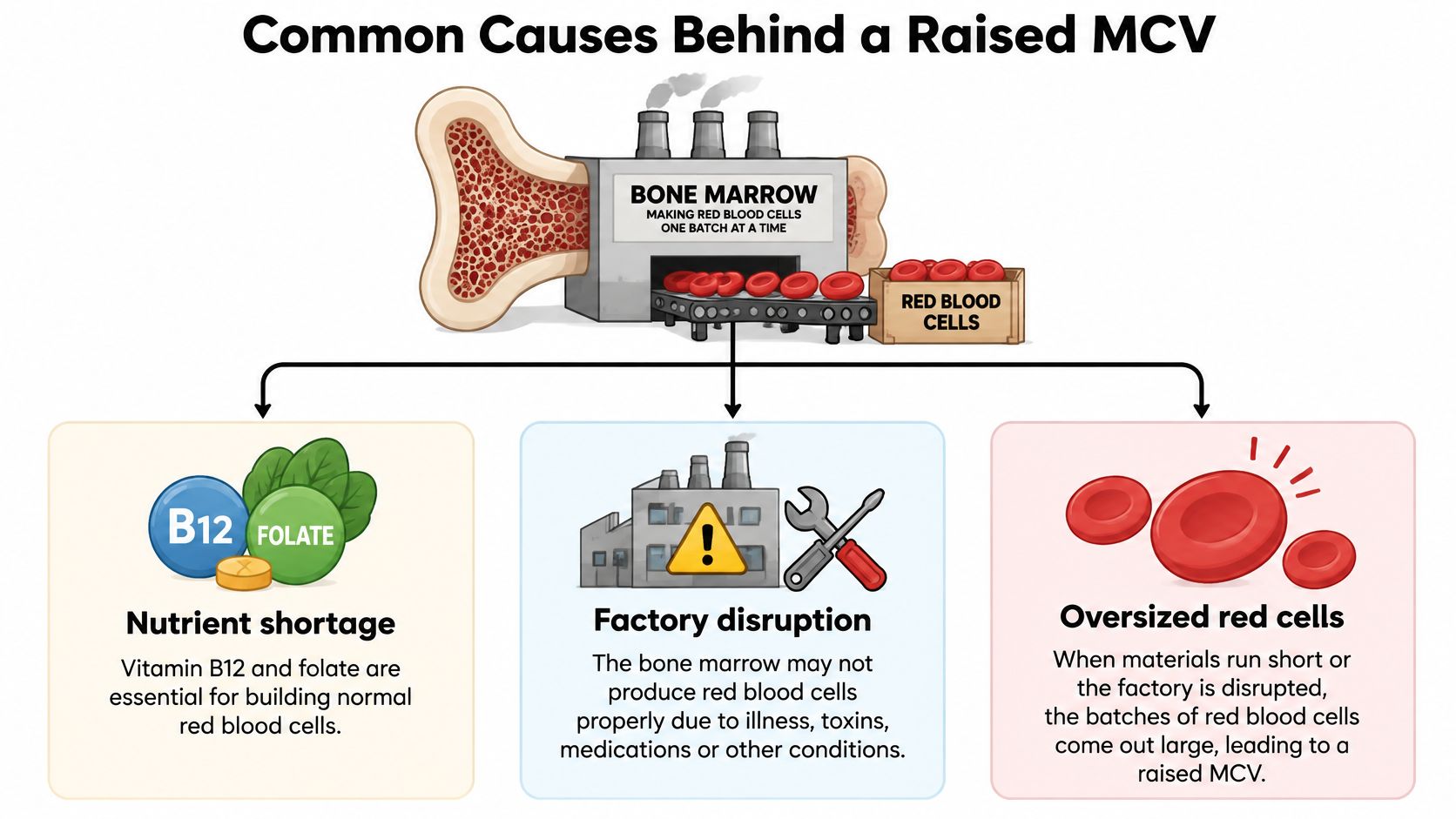
Vitamin B12 deficiency, alcohol exposure and folate deficiency belong on the list of possible explanations. Liver disease, thyroid dysfunction and certain medicines can also contribute. The table pairs each possibility with clues that help a clinician decide what to investigate, rather than checks that automatically confirm a diagnosis.
| Possible cause | Clue in history or results | Usual check |
|---|---|---|
| Vitamin B12 deficiency | Tingling, numbness, fatigue or low haemoglobin | Serum vitamin B12 |
| Folate deficiency | Restricted diet, malabsorption or alcohol use | Folate testing selected by the clinician |
| Alcohol use | Regular or heavy intake | Alcohol history and liver tests |
| Liver disease | Jaundice or abnormal liver enzymes | Liver function tests |
| Thyroid disorder | Tiredness, weight change or cold intolerance | TSH and relevant thyroid hormones |
| Medication effect | Methotrexate or hydroxyurea use | Medication review with the prescriber |
| Raised reticulocytes or haemolysis | Recent blood loss or signs of red-cell breakdown | Reticulocyte count and bilirubin |
| Bone marrow disorder | Low white cells or platelets, persistent fatigue | Blood film and specialist review |
How clinicians narrow the possibilities
The other blood-count measurements help distinguish these possibilities. Red-cell distribution width (RDW) describes how much red-cell sizes differ, while reticulocytes are newly produced red cells. A blood film allows assessment of cell appearance rather than relying only on automated measurements.
A medication-related result may call for monitoring rather than stopping treatment. A reticulocyte response may lead the clinician to investigate recent blood loss or red-cell breakdown. Less commonly, unexplained changes involving other blood cells require assessment for a marrow disorder.
The Australian Government's Diagnostic Medicine Clinical Committee report states that patients with macrocytosis don't benefit from repeating folate testing alone and supports assessment through an FBE that includes MCV. That distinction matters: repeatedly checking a suspected nutrient problem won't investigate an unrelated cause.
Before your appointment, think through what has changed since your previous blood test. Changes in medicines, alcohol intake or symptoms can help your clinician narrow the possibilities.
Why B12 and Folate Are Checked First
A common assumption is that larger red cells mean low B12, so a vitamin supplement should fix the result. B12 deficiency is one possible explanation, not an automatic conclusion. Whether vitamins should be checked early depends on your history, symptoms and existing results.
The relationship starts in the bone marrow, where these nutrients support the production of new blood cells.
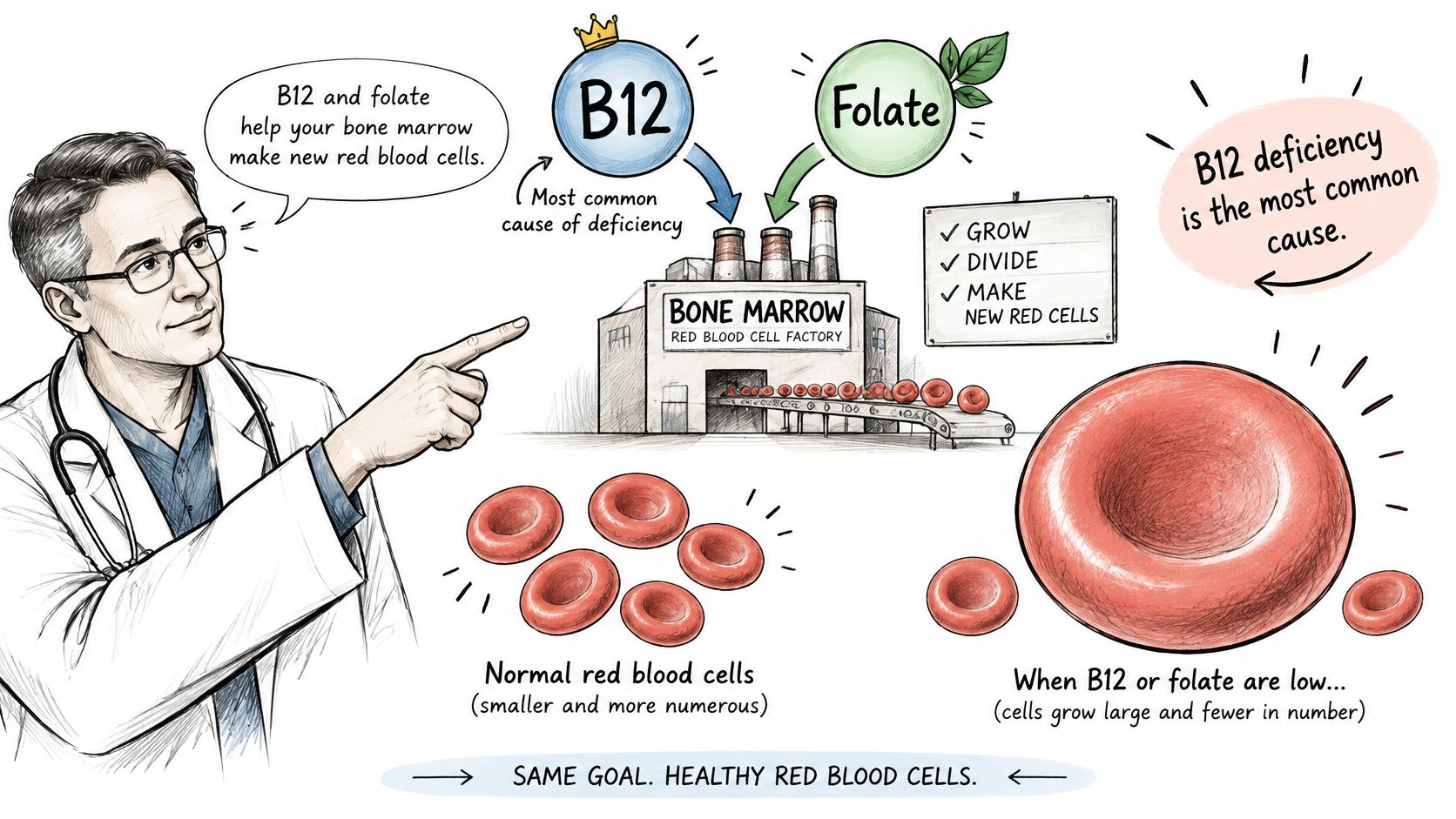
B12 and folate help developing cells make the material they need to divide normally. When either is deficient, red-cell production can become abnormal, producing larger cells and sometimes anaemia.
According to Healthdirect's vitamin B12 test information, B12 deficiency is the most common B-vitamin deficiency in Australia, while folate deficiency has fallen since mandatory folic-acid fortification of bread flour. Healthdirect also explains that B12 deficiency can cause macrocytic anaemia and peripheral neuropathy, including tingling or numbness.
Why folate alone can be the wrong shortcut
B12 deficiency can affect nerves even when anaemia isn't obvious. Folate may improve blood-count abnormalities while neurological injury from an unrecognised B12 deficiency continues. That makes starting folate alone an unsafe shortcut when B12 status hasn't been considered.
The aim isn't simply to make the blood count look normal. It's to identify and treat the underlying problem.
New tingling, numbness, unsteadiness or changes in memory deserve clinical attention. Low mood can also be relevant, although none of these symptoms identifies a vitamin deficiency on its own.
For an additional explanation of the topic, you can watch the following video.
Questions before choosing a supplement
Ask whether your B12 and folate have both been assessed where appropriate, whether any result is borderline, and whether further testing is needed. Our B12 blood test guide explains that marker in more detail.
Tell your clinician about supplements you're already taking. Don't delay a review of neurological symptoms while trying an over-the-counter vitamin.
When a High MCV Persists With Normal Vitamins
Normal B12 and folate results are useful, but they don't necessarily explain why MCV remains raised. They make it important to consider other possibilities rather than repeatedly returning to vitamin deficiency.
Persistent macrocytosis without anaemia isn't automatically harmless, but it isn't equivalent to leukaemia or another serious disease either. The distinction depends on the pattern of results, symptoms and findings from further assessment.
What a non-vitamin explanation can look like
Say your vitamin results are normal and your medication list includes a medicine known to affect red-cell production. Your clinician may assess whether the pattern fits that medicine and whether monitoring is appropriate. You shouldn't stop it just because MCV is flagged.
Another person may have abnormal liver tests, thyroid symptoms or evidence of increased red-cell replacement. Those findings lead to different investigations, even though the initial MCV flag looks similar.
Healthdirect's information on vitamin B and health explains the role of B vitamins in red-cell production and the association between alcohol use and low B vitamins. However, alcohol-related assessment shouldn't stop at a vitamin result: the clinician also considers intake, liver health and the broader blood-count pattern.
Patterns that deserve closer attention
A stable, slightly raised result with otherwise reassuring findings is different from a result that continues to rise while other counts fall. Clinicians look at the combination rather than treating persistence alone as proof of a particular disease.
- Changing blood counts: Falling haemoglobin or abnormal white cells or platelets can justify a more detailed work-up.
- Possible anaemia symptoms: Fatigue or breathlessness should be considered alongside the haemoglobin result.
- Other warning clues: Jaundice, neurological symptoms, recurrent infections or easy bruising warrant earlier medical review.
The decision isn't just whether MCV has remained outside the reference interval. It's whether the whole pattern is stable, improving or becoming more concerning.
An unexplained result calls for a plan, not a worst-case assumption.
Depending on the findings, that plan may involve scheduled monitoring, targeted tests or specialist assessment. Your clinician should explain what change would bring the review forward.
Track Your MCV Across Reports
A simple record makes it easier to distinguish your usual pattern from a new change. Use the original pathology reports rather than relying on memory or a list of flagged results in an app.
Keep a row for each FBE, including reports where MCV wasn't flagged. Those unflagged results help establish your baseline.
Build a usable trend log
Copy the values exactly, including units and the laboratory's MCV reference interval. The cells below are prompts, not example patient results.
| Date of FBE | MCV (fL) and lab range | Haemoglobin | White cells | Platelets |
|---|---|---|---|---|
| Earliest report | Enter result and range | Enter result and units | Enter result and units | Enter result and units |
| Intermediate report | Enter result and range | Enter result and units | Enter result and units | Enter result and units |
| Latest report | Enter result and range | Enter result and units | Enter result and units | Enter result and units |
Add rows for any other reports you have. If a value isn't available, write not available rather than estimating it or treating it as normal.
Read the pattern without diagnosing yourself
- Start with the earliest report: Add later results in date order so changes are easy to see.
- Mark the laboratory comparison: Note whether MCV was within range, near the upper limit or above it.
- Check the accompanying counts: Record whether haemoglobin, white cells and platelets stayed steady or changed.
A borderline result that returns to range can suggest a transient finding. An ongoing rise, particularly alongside falling counts, deserves clinician assessment rather than more self-directed monitoring.
Don't compare MCV values without checking whether the reporting laboratory or reference interval changed. Avoid interpreting small differences as meaningful on your own.
Bring the log together with the original reports. The summary helps your clinician see the sequence quickly, while the reports preserve details that may matter when deciding what to do next.
Follow-Up Tests and When to Book a Review
Follow-up works best as a clinician-guided sequence, not a shopping list of every possible test. Some investigations can be arranged together, and others aren't needed if the initial review provides a clear explanation.
This overview shows how confirmation, review and selective testing fit together.
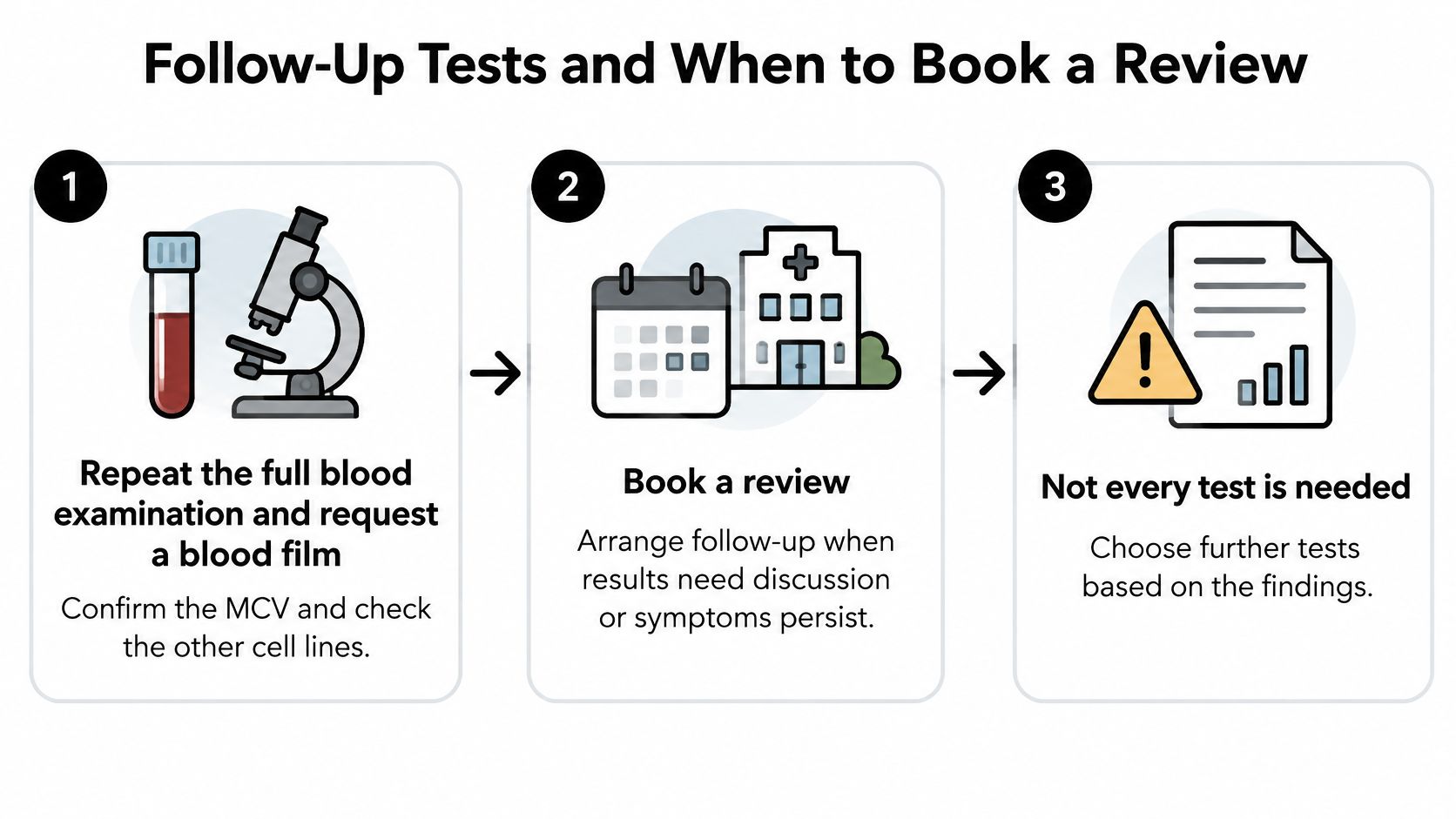
How the assessment may proceed
Confirm the blood-count pattern. Your clinician may repeat the FBE and request a blood film, particularly if the finding is unexpected or unexplained. This helps establish whether the abnormality persists and whether cell appearance or other counts need investigation.
Assess vitamin status where indicated. If B12 and folate haven't been assessed appropriately, testing can guide treatment. Confirmed deficiency also prompts consideration of why it developed, rather than replacement alone.
Review alcohol and medicines. The prescriber checks whether a medication effect fits the results and whether treatment or monitoring should change. Alcohol history can guide assessment of nutritional and liver-related contributors.
Check liver and thyroid function. Abnormal liver tests or thyroid results redirect the plan towards the relevant condition. Your clinician selects TSH and any additional thyroid hormone tests needed.
Consider reticulocytes and red-cell breakdown. If anaemia, blood loss or haemolysis is suspected, a reticulocyte count and related tests help assess how the marrow is responding.
Seek specialist advice when appropriate. A haematologist may be needed for unexplained persistent macrocytosis, a continuing rise or abnormalities involving other cell lines. Referral is an investigation step, not a diagnosis of a marrow disease.
The Australian Government's quality use of pathology report supports targeted folate testing when macrocytosis or malabsorption is suspected. The practical principle is to choose tests that can change the clinical plan.
Our complete blood panel guide can help you understand the blood-count component of that discussion.
When to arrange the appointment
A borderline result without symptoms can generally be discussed at a routine appointment, unless your clinician or pathology service advises otherwise. New neurological symptoms or marked fatigue deserve prompt assessment, and breathlessness, jaundice, bruising or recurrent infections should bring review forward.
Severe or rapidly worsening breathlessness, chest pain, fainting or sudden neurological symptoms require urgent medical care rather than waiting for a pathology appointment.
What to bring and avoid
- Bring your records: Previous FBE reports, their reference intervals and your completed trend log.
- List medicines and supplements: Include prescribed, over-the-counter and recently stopped products.
- Record relevant context: Symptoms and their onset, alcohol intake, recent illness and any blood loss.
Don't start supplements or stop prescribed medicines to correct MCV yourself. If you're alcohol-dependent, seek medical advice before abruptly stopping drinking.
We offer online private blood-test ordering without a GP referral or GP visit, with results delivered within 24–72 hours. Access to testing doesn't replace clinical interpretation, particularly when you're investigating an existing abnormal result.
Vital iQ Health offers private blood testing across Australia to support informed health monitoring. Visit Vital iQ Health to explore testing options, and discuss your high MCV with a clinician so any follow-up addresses the cause rather than just the flagged number.