Complete Body Checkup: What's Included and How to Choose
A complete body checkup can include blood tests, heart and lifestyle checks. Learn what it covers and how to tailor it to your age and risk.

The most popular advice about a complete body checkup is to choose the package with the most tests. That's not a reliable way to choose preventive care. A useful checkup selects tests that fit your health profile and explains what you'll do with each result, rather than treating a longer biomarker list as better protection.
Before paying for a panel, ask a more useful question: What decision could each test change? The answer should connect your symptoms, medical history and risks with a clear next step.
Why Australians Are Looking Beyond a Single Test
A broad checkup only helps when it has a purpose. Looking beyond an isolated symptom can be sensible, but testing every available marker isn't the same as assessing someone thoroughly.
The Australian Institute of Health and Welfare estimated that 47% of Australians, approximately 11.6 million people, had at least one of 10 selected chronic conditions in 2020–21. These included diabetes, asthma, arthritis, back problems, and mental and behavioural conditions. That range helps explain why people want an assessment that considers more than a single organ or blood result.
A useful checkup has a clinical question behind every measurement.
Consider someone seeking help for tiredness who also has heavy periods and a family history of diabetes. A clinician might investigate iron status while separately deciding whether glucose testing is appropriate. Those are different questions, even if samples are collected together.
A checkup is closer to a purposeful car service than an inspection of every bolt. The clinician checks relevant areas, considers what's already known and decides which findings need attention. The value comes from appropriate selection and follow-through, not from collecting results without a plan.
What a Complete Body Checkup Typically Includes
A complete body checkup usually combines a health-history discussion, physical measurements and selected blood tests. A urine sample may be appropriate, while a heart tracing is a separate investigation rather than part of a blood panel. There's no universal package that every adult needs.
Common components of a complete body checkup
| Component | What it measures | Sample or method |
|---|---|---|
| Blood pressure and body measurements | Blood pressure, height, weight and waist circumference | Clinic measurement |
| Lipid profile | Total cholesterol, LDL, HDL and triglycerides | Blood |
| Glucose or HbA1c | Current blood glucose or longer-term glucose exposure | Blood |
| Liver and kidney function | Liver enzymes, creatinine and estimated kidney filtration | Blood |
| Full blood count | Red cells, white cells and platelets | Blood |
| Iron studies | Ferritin, serum iron and transferrin saturation | Blood |
| Thyroid function | Thyroid stimulating hormone, or TSH | Blood |
| Vitamin D and vitamin B12 | Selected indicators of nutritional status | Blood |
| Sex hormones | Testosterone, oestrogen or progesterone, timed to the menstrual cycle where relevant | Blood |
| Urine test | Urine albumin, a protein used in kidney assessment | Urine sample |
| Electrocardiogram, or ECG | Heart rhythm and electrical activity | Recording, usually clinician-ordered |
What the main components contribute
Start with blood pressure and body measurements. They provide context that a blood sample can't supply, and they belong in the discussion even when you're mainly interested in pathology.
A lipid profile describes different blood fats, rather than giving a single cholesterol verdict. Glucose and HbA1c answer related but different questions about blood sugar. Liver and kidney markers help assess relevant aspects of organ health, while a full blood count examines blood cells rather than measuring every vitamin or mineral.
Iron studies deserve a targeted discussion when fatigue or heavy menstrual bleeding raises concern about iron deficiency. Ferritin helps assess iron stores; serum iron and transferrin saturation provide additional context. An unexpected finding should prompt consideration of its cause, not an automatic decision to start supplements.
Which additions need a specific reason
TSH may be appropriate when symptoms or history suggest a thyroid problem. Vitamin D and vitamin B12 testing should also have a reason, such as a relevant dietary, absorption or clinical concern, rather than being automatic additions.
Sex hormone testing needs a clearly defined question. Menstrual timing, hormonal contraception and other medicines can affect interpretation, so a randomly collected hormone panel may not answer the question you intended.
- Urine testing: Discuss urine albumin when kidney risk or an existing condition makes it relevant.
- ECG: A clinician may request this to investigate rhythm or other cardiac concerns. It isn't a standard blood-test component.
- Preparation: Confirm whether fasting, a morning collection or menstrual-cycle timing is required. Don't stop prescribed medicines without instructions.
Before arranging collection, mark which components you already have recent results for. Bring those reports to the discussion so your clinician can avoid unnecessary duplication.
Screening, Diagnostic and Monitoring Tests Are Not the Same
Think of a smoke alarm. Screening resembles an alarm operating when nothing seems wrong; diagnostic testing is the investigation when there's reason to suspect a problem; monitoring checks what happens over time once a condition or treatment is established.
The diagram illustrates those different purposes.
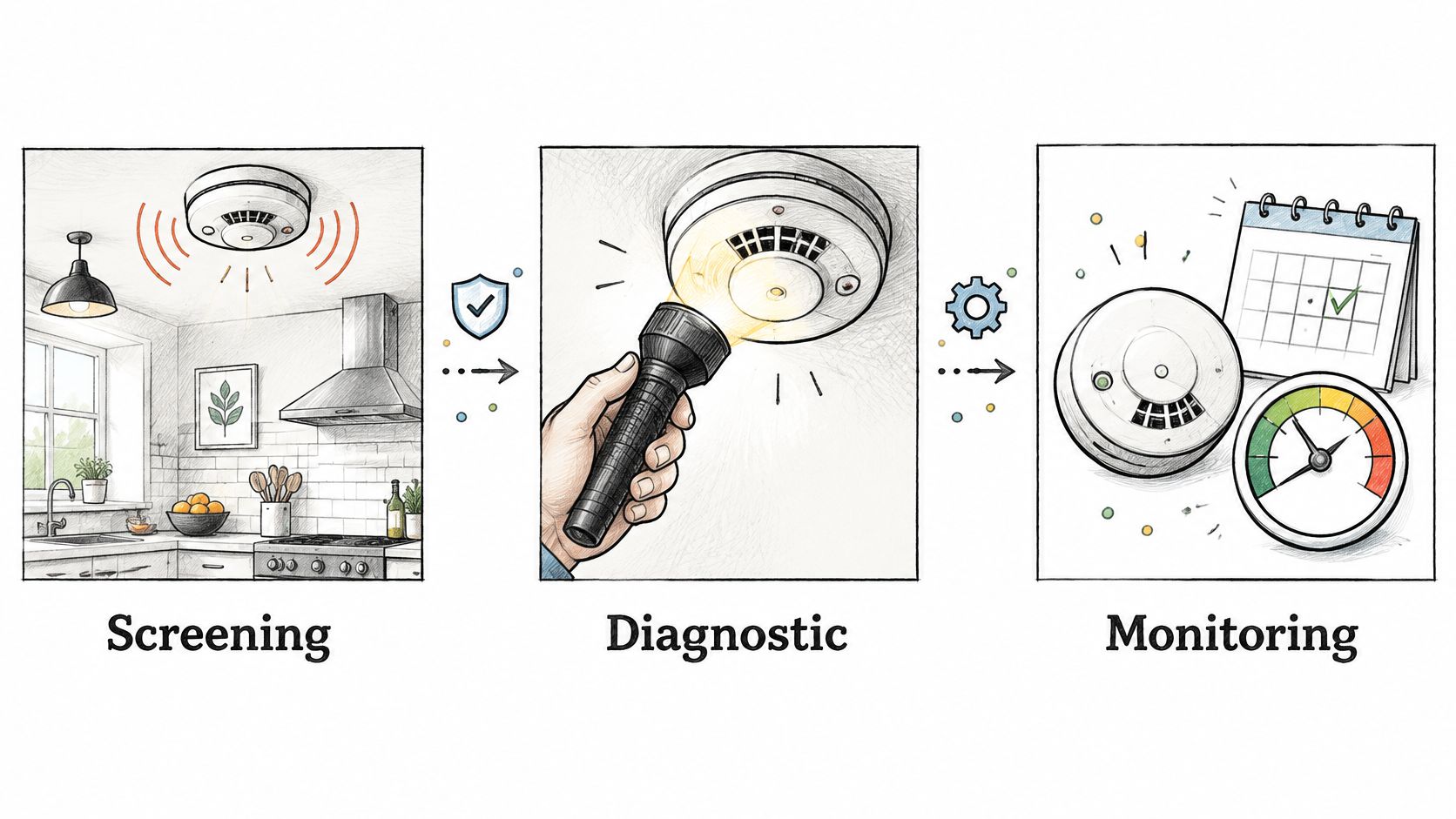
Services Australia's guidance on screening tests and scans distinguishes screening people without symptoms from diagnostic testing when disease is suspected. The same laboratory test can serve different purposes depending on why it's ordered.
The purpose changes the interpretation
- Screening: A symptom-free adult has cholesterol measured to help assess cardiovascular risk. The result contributes to a prevention discussion.
- Diagnostic testing: Someone with persistent fatigue and pale skin has blood tests to investigate possible anaemia. The clinician is trying to explain symptoms.
- Monitoring: Someone managing diabetes has HbA1c checked on a clinician-set schedule. The result helps assess management and whether changes are needed.
This matters when you order a panel yourself. A normal result doesn't rule out every disease, particularly when the panel wasn't designed to investigate your symptoms. An abnormal result may call for confirmation, examination or referral rather than immediate treatment.
The accompanying video offers another way to consider testing and follow-up.
More information can introduce new problems
A false positive suggests a problem that isn't present. Overdiagnosis is different: testing identifies a genuine abnormality that would never have caused symptoms or harm. Further investigation or treatment can then create burdens without improving someone's health.
These possibilities aren't reasons to avoid appropriate testing. They're reasons to ask whether the likely benefits justify the potential consequences, especially when adding tests without a clinical question.
Before booking, label each proposed test as screening, diagnostic or monitoring. Then ask what result would change the next decision.
If nobody can explain that decision, pause before adding the test. A reassuring-looking menu isn't a substitute for knowing why you're being tested.
Tailoring Your Checkup to Age, Sex and Heart Risk
Risk, not the length of the test list, should shape your checkup. Your age, sex, symptoms, medicines and family history help determine which measurements deserve attention and how a clinician should interpret them.
The Medicare Benefits Schedule heart-health assessment guidance describes assessments for adults aged 45–74 without known cardiovascular disease, and for Aboriginal and Torres Strait Islander adults from age 35, incorporating cardiovascular risk assessment and a preventive management plan. Your clinician should apply current assessment guidance and an appropriate calculator rather than relying on a package's age label.
Test discussions by profile
| Profile | Tests to discuss | Why it changes the plan |
|---|---|---|
| Adults in the standard heart-health assessment age group without known heart disease | Cardiovascular risk assessment with blood pressure, cholesterol and glucose as appropriate | An overall risk estimate helps guide prevention |
| Aboriginal and Torres Strait Islander adults eligible for earlier assessment | Earlier cardiovascular risk assessment | Conventional equations may underestimate risk |
| Known diabetes or kidney disease | HbA1c where appropriate, kidney function and urine albumin | Established disease changes risk assessment and monitoring |
| Family history of early heart disease | Lipid profile and blood pressure, potentially assessed earlier | Family history can alter when assessment is appropriate |
| Long-term prescribed medicines | Liver, kidney and other tests set by the prescriber | Some medicines require scheduled monitoring |
| Women with irregular cycles or planning pregnancy | Discussion of thyroid, iron and appropriately timed hormone testing | Symptoms, reproductive plans and timing change test selection |
Read cardiovascular markers together
Cholesterol results become more useful alongside blood pressure, smoking status and diabetes status. Kidney disease, family history and previous cardiovascular events also affect the clinical discussion.
Say someone has a cholesterol result inside the laboratory reference interval but smokes and has persistently high blood pressure. That person still needs an overall risk assessment. Conversely, an isolated cholesterol flag doesn't tell a clinician everything needed to choose treatment.
For Aboriginal and Torres Strait Islander adults, assessment should recognise the possibility that conventional risk equations underestimate risk. The conversation needs appropriate clinical context, not just a calculator printout.
Let established conditions and treatment guide testing
Known diabetes or kidney disease requires a condition-specific plan. Not everyone in those groups needs the same tests, and HbA1c isn't automatically indicated solely because someone has kidney disease.
A family history of early heart disease should include which relative was affected and when it happened. Bring those details rather than recording only that heart problems run in the family.
For prescribed medicines, use the prescriber's monitoring schedule. Don't replace it with an unrelated wellness panel that omits the marker needed to assess treatment safety.
Women with irregular cycles or pregnancy plans need an individual discussion rather than an automatic hormone bundle. Iron status, thyroid symptoms, cycle history and current medicines may be more useful starting points than testing every reproductive hormone.
The practical outcome should be a documented assessment: relevant measurements, identified risks, chosen investigations and a clinician responsible for reviewing significant findings.
Screening Programs a Blood Panel Cannot Replace
A normal blood panel doesn't mean you're up to date with cancer screening. Cholesterol, thyroid and blood-count results answer different questions from tests designed for specific screening programs.
The Australian Government's chronic-conditions guidance identifies national screening programs covering bowel, breast, cervical and lung cancer, with eligibility and intervals determined by program guidance and individual risk. A complete body checkup should help you check your participation, not distract you from it.
Keep program-specific tests on your calendar
- Bowel screening: Complete the program's test and follow its instructions for results and subsequent screening.
- Breast screening: Check whether you're eligible and discuss symptoms or relevant family history separately.
- Cervical screening: Confirm when your next screening test is due rather than assuming a general health appointment includes it.
- Lung screening: Discuss eligibility using your smoking exposure and other program criteria.
Prostate testing is another individual decision to discuss with your GP, rather than assuming it's covered by a general panel. Our guide to PSA screening in Australia can help you prepare questions about its benefits and limitations.
Keep separate records: Your pathology results and your screening calendar serve different purposes.
For example, someone with a normal full blood count who has completed a bowel screening kit still needs to follow the bowel program's instructions. The blood count doesn't change the kit's result or determine when program screening is next due.
Record completed screening, outstanding follow-up and the next recommended appointment. Check current eligibility with your GP or national program information, particularly if your history or symptoms have changed.
Reading Borderline and Incidental Results
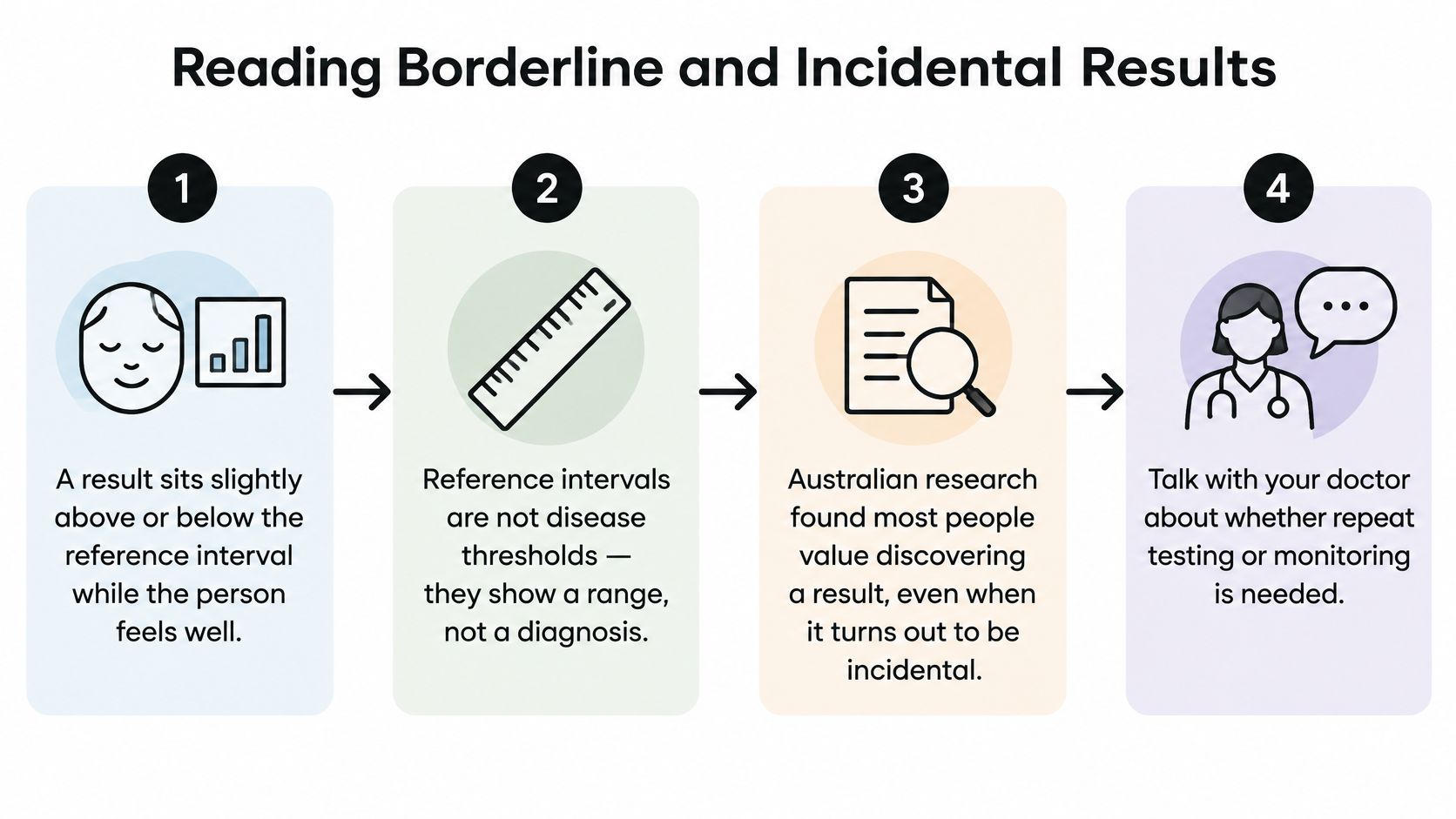
A result is slightly high or low, but you feel well. It's understandable to worry, yet a laboratory flag isn't a diagnosis, and a reference interval isn't necessarily a threshold for disease or treatment.
An Australian study on incidental findings and overtreatment found that most participants valued discovering harmless abnormalities, even while recognising the possibility of overtreatment. Wanting information is reasonable; deciding what deserves action requires a separate conversation.
The infographic provides an overview of that conversation.
Work through the result in context
Establish how significant the abnormality is. Ask whether the result is borderline, clearly abnormal or identified as critical by the laboratory. The marker involved matters as much as the size of the deviation, so don't judge urgency by the colour of the flag alone.
Check the collection circumstances. Tell your clinician about fasting, recent strenuous exercise, illness, supplements and medicines. Time of day, pregnancy and menstrual-cycle timing may also be relevant, and documenting these details helps explain an unexpected result.
Compare previous results. A stable pattern may require a different response from a new or progressive change. Use dated reports with units and laboratory reference intervals so your clinician can make a meaningful comparison.
Confirm whether another test is needed. Your clinician may recommend repeating the measurement or choosing a different test to clarify it. Ask when to repeat it and what preparation is needed, rather than booking another draw immediately.
Match the finding to your history. Review symptoms, existing conditions and relevant risks before deciding on treatment or referral. If a nutritional marker is abnormal, for example, the discussion should include possible causes rather than only which supplement to buy.
Act on urgent symptoms. Seek urgent medical care for chest pain, severe breathlessness or sudden weakness rather than waiting for repeat pathology. A recent reassuring panel shouldn't delay assessment of a new emergency.
Leave the review with a specific plan
A useful review should answer whether you need treatment, further investigation, observation or no action. If monitoring is recommended, ask what change would trigger another appointment and who will organise the next test.
Don't start high-dose supplements or stop prescribed treatment because of an isolated result. Those choices can affect your health and complicate the next assessment.
For help understanding report terminology, use our guide to how to interpret blood test results alongside clinical advice. Keep dated copies of every report, including results that didn't require treatment, so future clinicians can see the pattern rather than a disconnected snapshot.
Choose Your Checkup Before You Book
Start with your profile, not the largest package. Write down what you want the assessment to resolve, whether that's a prevention discussion, investigation of symptoms or monitoring an established condition.
A short written checklist makes that decision easier.

Bring the information that changes test selection
- Personal details: Record your age, sex and relevant reproductive or pregnancy information.
- Current concerns: Describe symptoms, when they began and whether they're changing.
- Family history: Include heart disease, cancer, thyroid conditions and other relevant inherited risks.
- Treatment: List prescribed medicines, supplements and existing monitoring instructions.
- Previous care: Gather recent pathology reports and your screening calendar.
For each proposed test, write its purpose and the decision it could inform. When comparing options, consider the cost of a full body checkup alongside what's included and how you'll arrange clinical interpretation.
Arrange access and follow-up together
At Vital iQ Health, we let customers order private blood tests online without arranging a GP referral or GP visit first. All collection centres we use are NATA accredited. Our partnered telehealth GPs can walk you through your results, answer questions and recommend next steps from home.
That access complements your regular GP care rather than replacing it. Bring your results to your GP, particularly when they relate to ongoing treatment, unresolved symptoms or repeat findings.
Before booking collection, set aside a date to review the results with a clinician. A checkup is more useful when you know who will explain the findings and help you act on them.
Vital iQ Health offers online private blood testing with NATA-accredited collection centres and access to partnered telehealth GPs for results discussions. Visit Vital iQ Health to explore testing that matches your health questions, and arrange a clinical review to turn your results into a practical next-step plan.