Albumin Blood Test Low: What It May Mean
Seeing an albumin blood test low result raises questions fast. Learn Australian cut-offs, paired tests, and why one figure is not a diagnosis.
Australian practice commonly calls serum albumin low below about 35 g/L, but the reporting laboratory's own interval determines a near-cutoff result, and that figure isn't proof of poor dietary protein. If albumin is made from protein, why doesn't a low result just tell you to eat more of it?
That question trips up many people reading a report on their own. The line says albumin blood test low, the value is flagged, and the obvious answer seems to be food. In reality, the number is a signal. It gains meaning from the interval printed beside it, from the tests around it, and from what's happening in your body, such as recent illness, swelling, weight change or pregnancy.
Reading it well doesn't mean guessing a diagnosis. It means knowing which question to ask next, and which number to stop staring at in isolation.
What Counts as a Low Albumin Blood Test Result
A flagged albumin result can look precise while still being hard to interpret. Start with the figure beside serum albumin, usually shown in g/L on a liver or general panel, then read it against the interval printed by the laboratory that tested your sample.
How Australian Sources Mark a Low Serum Albumin
| Situation | Albumin figure | How to read it |
|---|---|---|
| Everyday Australian clinical use | Below about 35 g/L | Commonly called low, if the lab interval agrees |
| Australian pulmonary embolism study, day one | Below 35 g/L in 160 of 1,032 patients (15.5%) | 35 g/L or above classed as normal in that study |
| Different analytical platforms | Can differ slightly | Compare like with like using the same laboratory where possible |
| Older age | Tends to be lower | Use an age-aware laboratory interval |
| Women | May be lower than in men | Still use the reporting lab's interval |
| Result near the printed cutoff | Close to the lower limit | Do not apply a universal threshold |
Austin Pathology's albumin resource describes low serum albumin in Australian practice as below approximately 35 g/L, with the exact interval depending on laboratory, analytical method, age and clinical context; it also recounts a tertiary-referral study of 1,032 patients admitted with confirmed pulmonary embolism between 2000 and 2012, where 160 patients (15.5%) had hypoalbuminaemia on day one.
Different analytical platforms can return slightly different albumin results even when the specimen is similar. That is why the reporting laboratory's interval matters more than a cutoff copied from another service, and why a result close to the lower limit deserves comparison with a repeat value from the same laboratory before it is treated as a new trend.
Practical rule: If your result sits close to the printed lower limit, treat the label as provisional until you have checked that laboratory's interval and, where needed, a repeat result measured the same way.
Age and sex add another layer. Albumin tends to decrease with older age and may be lower in women. A generic line can therefore mislead an older adult whose laboratory uses an age-aware interval, or reassure someone whose result has fallen while remaining above a universal threshold.
Three checks turn the flag into a better question.
- Find the unit: Confirm the result is in g/L, not a different unit copied from an overseas source.
- Find the interval: Read the lower and upper limits printed for that test on that report.
- Find the distance: Note how far your value sits from the lower limit, not just whether it is flagged.
A value well below the interval asks a different question from one just under it. A drop from your own earlier result also differs from a value that has always sat near the lower end. The number is a nonspecific signal: it points to production, loss, dilution or illness patterns that the surrounding tests and history can separate. It is not, by itself, proof of inadequate dietary protein.
Why Albumin Falls and Which Tests Explain It
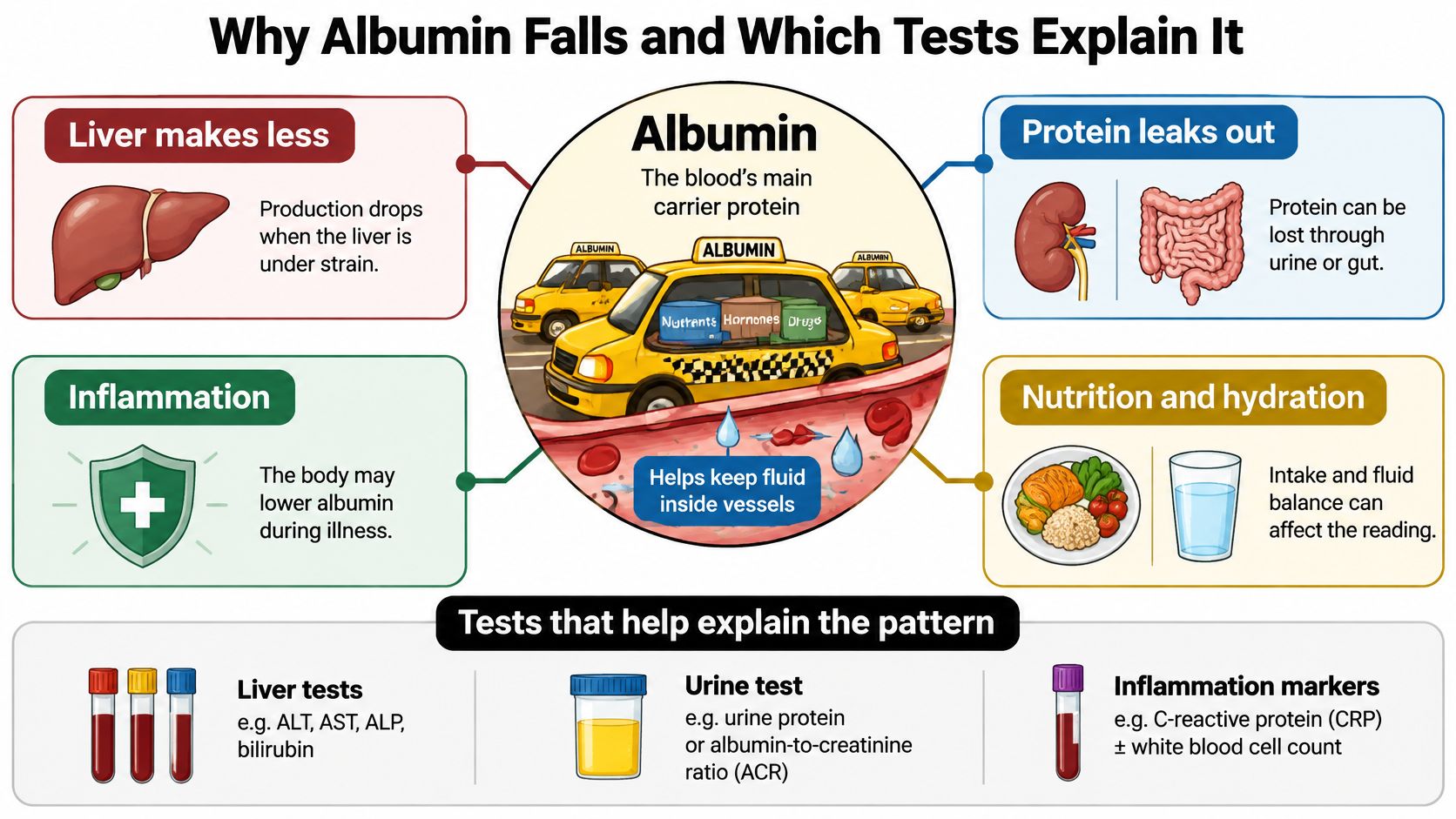
Albumin does two jobs at once. It carries substances around the body, and it helps hold fluid inside blood vessels. Albumin works like a fleet of taxis: when there are fewer taxis in circulation, you can't assume the factory stopped for one simple reason. Fewer may be made, more may be leaving, the road may be flooded with extra fluid, or the fleet may have been redirected during illness.
That picture matters because an albumin blood test low result has several possible routes. Your liver makes albumin, so severe liver dysfunction can reduce production. Protein can leak through damaged kidneys, through the gut, or through burned skin. Extra fluid can dilute what's there. Inflammation can also push the liver to prioritise other proteins, so albumin falls even when meals haven't changed.
The visual below maps those routes to the tests that help sort them out.
The Practical List of Causes to Work Through
Australian guidance from the Royal College of Pathologists of Australasia identifies explanations including overhydration, chronic liver disease, kidney protein loss such as nephrotic syndrome, protein-losing gut disorders, burns, and the acute-phase response to inflammation. That list is useful because it stops you shrinking the result to diet. Each item points to a different companion test or question.
Notice how different those routes feel in real life. Overhydration is about dilution, so the total amount of albumin may not have changed much while the concentration falls. A protein-losing gut disorder or nephrotic syndrome is about loss, so protein is leaving the body. The acute-phase response is about illness, so recent infection or surgery becomes central. Chronic liver disease is about production, so liver enzymes and bilirubin carry more weight.
The RCPA albumin manual entry lists an age-dependent reference interval of approximately 32-45 g/L, and published intervals differ between laboratories and sources. A value can look low on one chart and sit inside another, even before you consider the person's age or clinical setting. Content that tells you to compare your number with one universal line can create alarm or false reassurance.
Why Low Albumin Is Not Automatically a Liver or Diet Verdict
Australian general-practice guidance makes a similar caution for liver tests. The RACGP liver function tests guidance states that a low serum albumin result should not be interpreted as proof of liver disease, and lists systemic inflammation, malnutrition, pregnancy-related physiology and protein-losing conditions as alternatives. Severe hepatic dysfunction can reduce albumin synthesis, yet it is only one possibility among several.
Pregnancy shows why context matters. A lower albumin can reflect normal physiology rather than organ failure, yet it still needs interpretation alongside the rest of the pregnancy picture. Malnutrition can matter too, and clinicians assess it through weight change, intake, muscle loss and examination, with albumin as one input among several. Inflammation can lower the result independently of what you've eaten, so advising more protein from one number misses the mechanism.
A low albumin result is often misinterpreted as a simple protein-deficiency problem, when the useful framework is the combination of albumin with symptoms and other results.
Read the Companions in a Sensible Order
Start with liver enzymes and bilirubin. If albumin is low and those tests are abnormal, impaired hepatic synthesis becomes a stronger possibility to discuss. If cirrhosis is already known, low albumin together with increased bilirubin is associated with poorer survival, so the pairing helps assess severity in someone whose diagnosis is already established.
Next, look at total protein and globulins. Low albumin plus increased globulins may point toward an inflammatory pattern ahead of isolated impaired hepatic synthesis. That pattern is a clue. It tells the clinician to weigh infection, inflammation or immune activity more heavily when they review the whole report.
Then check inflammatory markers, renal tests and nutritional assessment alongside the clinical examination. On a broader panel, such as a complete blood panel, creatinine, liver enzymes and other markers sit near albumin for a reason. They're the companions that turn a flagged line into a readable pattern.
Symptoms change the weight of the result too. Low albumin with oedema or ascites raises more concern than an isolated borderline result in someone who feels well. Swelling suggests fluid isn't staying where it should, or protein loss is significant enough to matter clinically. No swelling doesn't dismiss the result, though it does change the urgency and the likely next step.
Before any repeat test, write down the questions that give the number context.
- Recent illness: Was there a recent infection, surgery, flare or hospital stay?
- Body clues: Has weight changed, and is there swelling or persistent diarrhoea?
- Intake and loss: What are you eating, and are liver enzymes, kidney function, total protein, inflammatory markers or urine protein abnormal?
Measurement adds one final wrinkle. Albumin is routinely measured using dye-binding methods, and different dyes vary in specificity, particularly at low concentrations. Repeat testing is therefore best performed through the same laboratory to improve comparability, and keeping the original report means the method, interval and date stay visible.
You can order a private blood test online in Australia without a GP referral, which means you may receive an isolated abnormal value without the clinical context a GP would normally supply in the appointment. Don't fill that gap with a diet verdict. Albumin is a nonspecific marker shaped by illness, fluid balance, inflammation, nutrition and protein loss, and one flagged number cannot settle the question on its own. The follow-up questions above are the bridge between the flagged result and a useful clinical conversation.
Three Reports and What Each Pattern Suggests
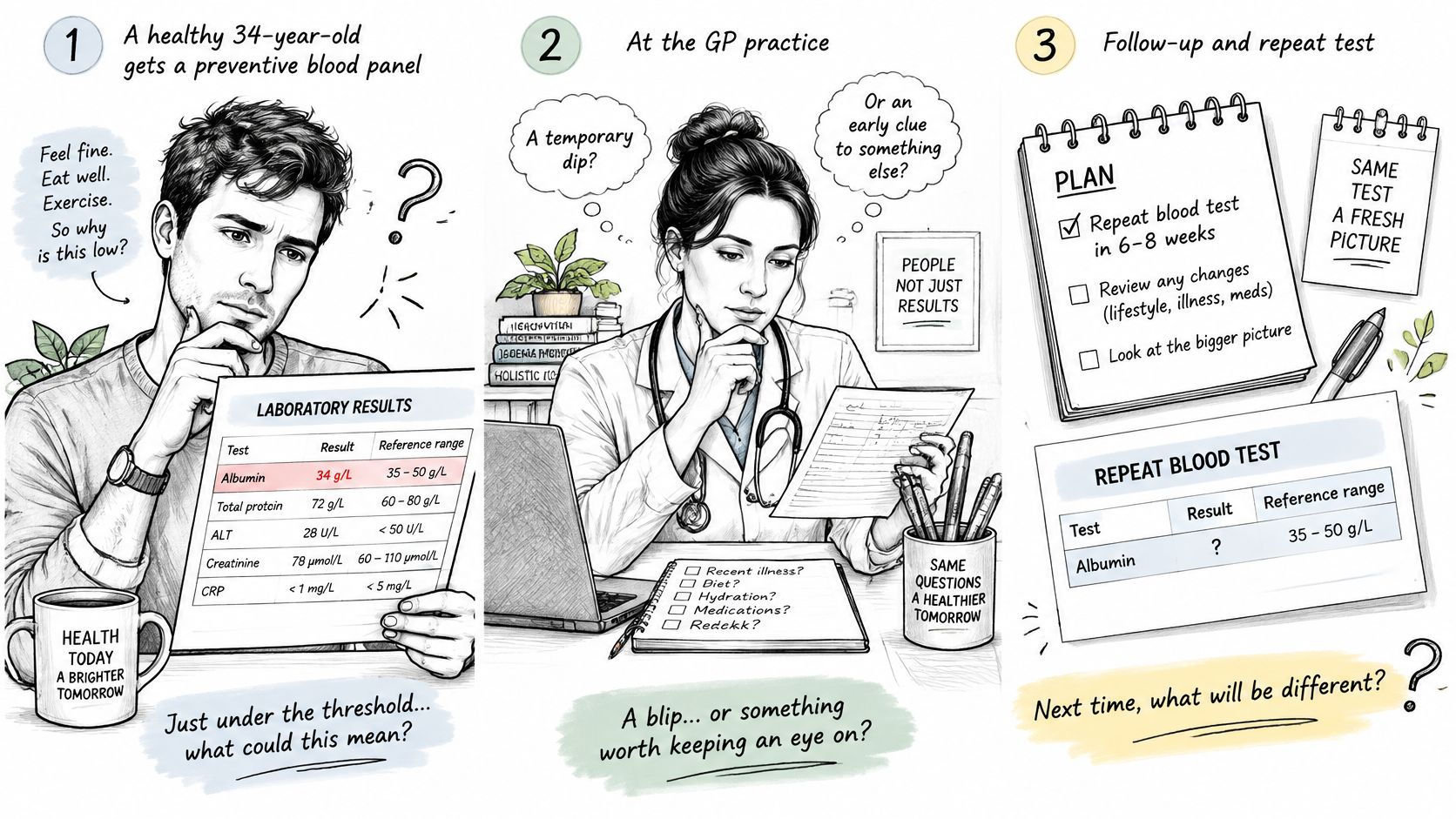
Three people can receive a low flag and need three different conversations. The image below shows the setting where that sorting usually happens, with the report open and the companion results visible.
Three Reports and the Next Question Each Raises
| Case | Albumin | Companion results | Next question |
|---|---|---|---|
| Case one, well 34-year-old preventive panel | 34 g/L, just under a 35 g/L line | Normal liver enzymes and creatinine, no swelling, no recent illness | Read the lab's own interval; if repeating, use the same laboratory |
| Case two, clearly low albumin | Clearly low | ALT and bilirubin raised, no diarrhoea | Impaired hepatic synthesis, or severity if cirrhosis is known |
| Case three, low albumin with swollen ankles | Low | Urine dipstick shows protein | Protein leaving the body; move to the kidney checks in the next section |
Case one is the near-line result. A well 34-year-old's preventive panel shows albumin at 34 g/L, liver enzymes and creatinine are normal, and there's no swelling or recent illness. The useful move isn't to overhaul meals overnight. It's to read that laboratory's interval, remember that a small method gap can reclassify a near-line value, and use the same lab if a repeat is needed.
Case two changes because the companions change. Albumin is clearly low, ALT and bilirubin are up, and there's no diarrhoea to suggest gut loss. That pattern raises impaired hepatic synthesis, and if cirrhosis is already known, it raises severity. The next question is about liver function and staging, not about starting a new diet plan.
Case three changes again. Albumin is low, ankles are swollen, and the urine dipstick shows protein. Now the pattern points to protein leaving the body, so kidney checks move to the front. A protein shake experiment would answer the wrong question and could delay the urine testing that clarifies the route of loss.
The short video below is a useful pause point if you're comparing your own report with these patterns.
One more scenario deserves a calm note. In pregnancy, a lower result can reflect normal physiology and still needs the clinician's context, including blood pressure, urine findings and how the pregnancy is progressing. Context doesn't mean ignoring the number. It means refusing to read it as if pregnancy weren't happening.
Same low number, three different next questions.
When you look at your own panel, borrow the discipline from these cases. Don't ask only, "How do I raise albumin?" Ask, "What pattern is this part of?" A wider review might sit alongside tests such as iron studies test results if nutrition or chronic illness is part of the broader picture, but no companion test replaces reading albumin with liver, kidney and inflammatory clues together.
When the Kidneys May Be Losing Protein
Two tests share the word albumin, and they answer different questions. Serum albumin measures how much albumin is in your blood. Albuminuria means albumin is appearing in your urine, and it can occur while the serum level is still normal.
If your serum albumin is low, the urine test that usually adds the most information is the urine albumin-to-creatinine ratio, or ACR. It checks whether protein is leaving through the kidneys, rather than looking at the blood number again.
Urine ACR Checks When Serum Albumin Is Low
| Check | Figure or rule | What it means |
|---|---|---|
| Men, urine ACR | Below 2.5 mg/mmol | Generally consistent with normal albumin excretion |
| Women, urine ACR | Below 3.5 mg/mmol | Generally consistent with normal albumin excretion |
| ACR above those levels | Persistent elevation | A marker of kidney damage, not a one-off label |
| Confirming chronic kidney disease | At least two elevated ACR results over three months | One abnormal screen is not enough |
| Temporary rises | Infection, fever, heart failure, heavy exercise, high-protein intake, menstruation, vaginal contamination | Repeat before treating the result as lasting |
| Escalate promptly | Marked proteinuria or oedema | Concern for nephrotic-range loss; clinician review |
Australian guidance in the RACGP National Guide chronic kidney disease chapter considers ACR below 2.5 mg/mmol in men and below 3.5 mg/mmol in women generally consistent with normal albumin excretion, with persistent elevation a marker of kidney damage. Use the thresholds as a sorting tool. They tell you whether excretion looks normal, not whether one raised result proves chronic disease.
How to Use a Row Without Overreading It
One abnormal screen isn't enough because urine albumin can rise briefly for ordinary reasons. Urinary infection, fever, heart failure, heavy exercise and a high-protein meal can all push it up temporarily. Menstruation or vaginal contamination can also affect a sample, so timing and collection matter when you repeat it.
Chronic kidney disease assessment generally requires at least two increased ACR measurements over a three-month period. Urinalysis, a paired protein measurement and, when indicated, renal ultrasound help clarify the cause. That repeat rule protects you from turning a fever, a hard training session or a contaminated sample into a permanent label.
Put the escalation steps in order when serum albumin is low and kidney loss is possible.
- Check creatinine and eGFR: These show how the kidneys are filtering overall.
- Check urine ACR and total urinary protein: These show whether protein is being lost in urine.
- Check blood pressure and oedema: These add the clinical signs that change urgency.
Marked proteinuria or oedema raises concern for nephrotic-range protein loss and warrants prompt clinician review. Don't watch and wait with a diet change when swelling and heavy urine protein are present together. The table is your scan tool, but the decision comes from combining the urine result, kidney function, blood pressure and examination.
Why a Low Result Flags Illness Not a Remedy
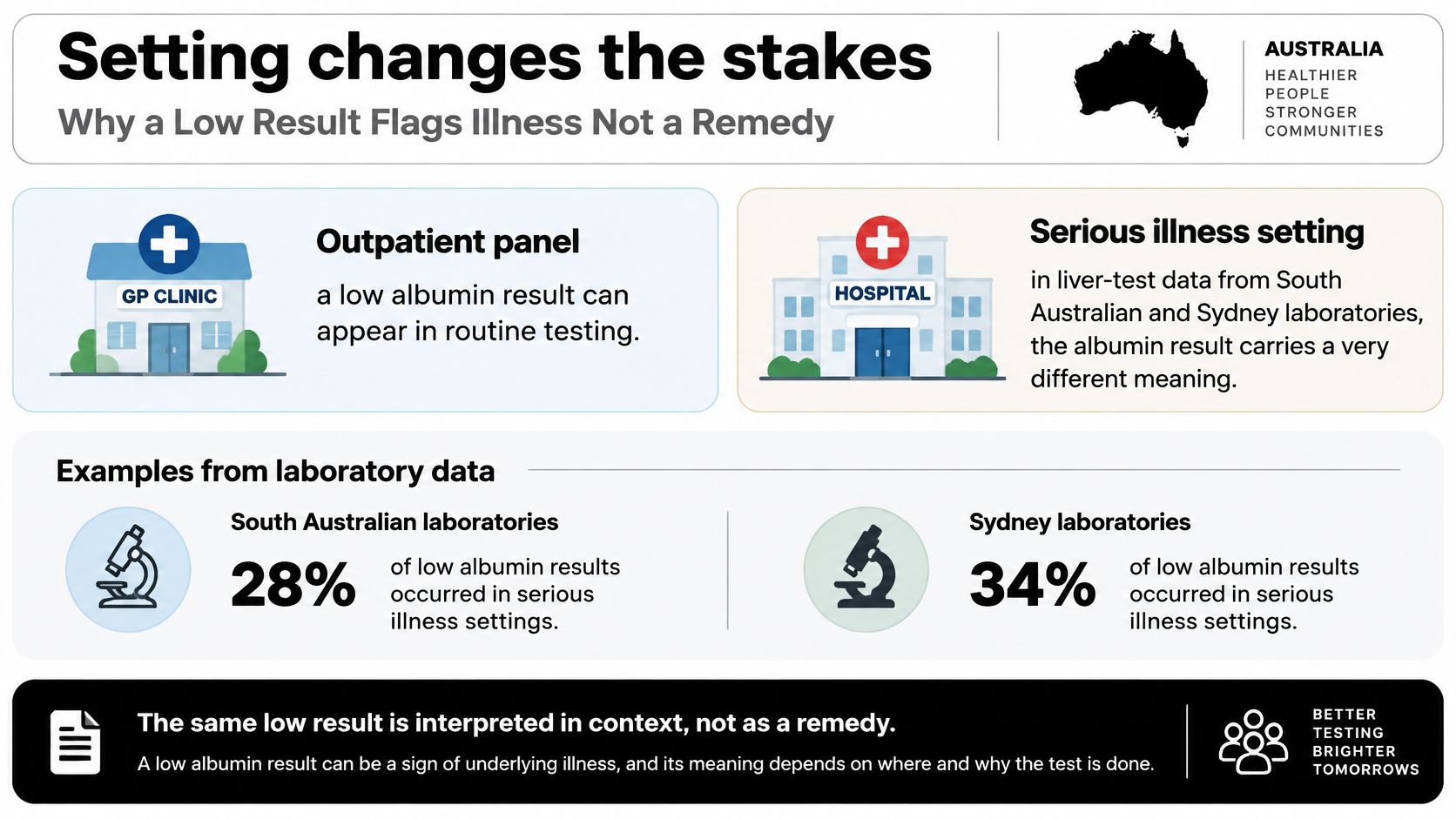
Setting changes the stakes of the same flagged line. A mildly low result on a well person's preventive panel doesn't carry the same meaning as a low result at hospital admission during serious illness.
The infographic below separates those settings so the numbers that follow aren't read as a personal prediction.
What Australian Hospital Data Show
In liver-test data from South Australian and Sydney laboratories, the laboratory reference interval for albumin was 34-48 g/L, and nearly 40% of hospital patients were hypoalbuminaemic at admission, as summarised in the Therapeutic Goods Administration assessment of albumin. Among those with low albumin, 20% had died by 12 months, a significantly higher proportion than among patients with normal or high albumin.
Those figures come from people already sick enough to be in hospital. They don't mean a low outpatient result predicts the same outcome for you. What they do show is why clinicians treat albumin as a risk marker in unwell patients: the lower it sits and the sicker the setting, the more weight it carries. Context, not the printed line alone, gives the number its meaning.
Why Giving Albumin Is Not the Same as Fixing the Cause
If a low reading meant the body needed more albumin, then putting albumin back would fix the problem. Large Australian and New Zealand intensive-care research tested exactly that idea. A major randomised trial found that albumin used as an ICU fluid did not reduce 28-day mortality compared with saline. Topping up the protein did not change the outcome that mattered.
That finding draws a clean line for readers at home. Albumin given as an intensive-care fluid is a specific medical decision, and even in that controlled setting it didn't repair the underlying illness.
Low albumin can signal inflammation or disease severity, but automatically giving albumin is not equivalent to correcting the underlying cause.
This is also why albumin isn't a supplement to start from a web result, and why a low value shouldn't be read as a standalone nutrition score. Other results on a panel, such as a B12 blood test, answer their own specific questions, but albumin's job here is different. It flags that something in the overall picture deserves assessment.
Take the report to a clinician for that assessment rather than self-treating. The useful response is to identify whether inflammation, loss, dilution, liver dysfunction or another process is driving the result, then treat that process. Correcting a number on paper isn't the same as correcting the reason it fell.
Decide Your Next Clinical Step
Sort your report into one of three moves. The right move depends on symptoms, how far the result sits below the interval, and what the companion tests show.
Choose Prompt, Planned or No Self-Treatment
Seek prompt review, the same day or at the next urgent slot, if you have marked swelling, breathlessness, black or bloody stools, or rapid weight gain that looks like fluid. Do the same if albumin is very low alongside abnormal liver tests, or if urine protein is heavy. Those combinations can signal significant protein loss, liver problems or fluid shifting, and they shouldn't wait for a routine recheck.
Book a planned review if the result is borderline, you feel well and companion tests are normal. Bring the original report, not a screenshot of one line, and ask whether a same-laboratory repeat is worth doing with liver enzymes, creatinine, eGFR and urine ACR. That visit is about confirming the pattern under comparable conditions, not chasing a single flag.
Don't self-start treatment for the number. A high-protein diet or an albumin product isn't a treatment for an unexplained low result. If nutrition is part of the cause, a clinician or dietitian can assess weight, intake and absorption properly. If inflammation or protein loss is driving it, extra protein won't answer the question.
Take Three Questions Into the Appointment
Write these down before you go, along with the report date, sample type and laboratory name so later comparisons stay valid.
- Which interval was used: Ask which reference interval this laboratory applied to your result.
- Has it fallen: Ask whether the value has dropped since an earlier test, even if both results sit near the range.
- What's missing: Ask which paired tests are still needed to explain the pattern.
A private online panel can add data, but it doesn't replace interpretation. We offer private blood tests you can order online without a GP referral or GP visit, available across all of Australia through a NATA-accredited collection centre near you, with test results delivered within 24-72 hours. That access helps you gather a repeat or companion result sooner, yet the pattern still needs a clinician to interpret it before anyone acts.
Keep the one-line rule in front of you when the flag looks alarming at midnight. A single low number is a question for a clinician, not a verdict.
If your albumin result needs a comparable repeat or companion liver, kidney and urine markers to make sense of the pattern, you can order private testing online and attend a NATA-accredited collection centre near you, with results delivered within 24-72 hours for your clinician to review. Visit Vital iQ Health to choose the panel or individual markers that fit the questions your report has raised, then take the full results to your GP or treating clinician for interpretation.