Low Zinc Levels: How to Read the Result
Low zinc levels are a clue, not a diagnosis. See Australian intake figures, test limits, causes and what to check before any supplement.
In 2023, 29.7% of people aged two years and over, about 7.3 million Australians, had usual zinc intakes below the estimated average requirement, up from 22.7% in 2011–12, according to the Australian Bureau of Statistics. That is a national diet signal, not a verdict on the person holding a pathology printout.
A highlighted zinc line is a clue. It isn't a diagnosis you can settle from one cell on the page. Read it against what you eat, how well you absorb food, whether you were ill on the day of the test, and, before any high dose, how zinc and copper sit together.
A Low Number Is Not the Whole Story
Say you open a report on a Tuesday night and the zinc row is marked low. The national picture above can make that feel like a confirmed shortage. It doesn't. Those usual-intake figures describe food, not the tube of blood drawn from you.
Zinc is a trace mineral. You need only a small amount, and you use it for immune defence, skin repair, taste, smell, growth and the enzymes that keep ordinary chemistry moving. Think of a pantry shelf. A low shelf means the stock of one ingredient is down. It doesn't mean every meal has failed. A normal shelf reading can still hide a problem if the ingredient never makes it from the plate into the pot. Absorption can fail while the cupboard looks fine.
A low serum or plasma zinc result is the laboratory version of that shelf check. It only makes sense alongside symptoms, what you eat, gut disease, inflammation and medicines. Laboratories also print their own reference range, and that range is the one that applies to your slip.
A practical reading order keeps you from jumping to a tablet. First, the figures that frame a report. Then the reasons a value falls. Then the ways the blood test itself misleads. Then the groups where low readings have clustered. Then the checks to finish before any supplement. The aim is a contextual reading of your own result, not a self-diagnosis from one highlighted number. If zinc was ordered inside a complete blood panel, read the neighbouring rows the same way. One marker rarely carries the whole story.
Figures That Put a Low Result in Context
A low zinc figure can refer to two different things: how much zinc people get from food, or the concentration measured in blood. The table separates those measures so a dietary benchmark is not mistaken for a laboratory cut-off.
| Figure | Value | How to use it |
|---|---|---|
| Usual intake below EAR, age 2+ (2023) | 29.7% (about 7.3 million) | Population diet risk, not a personal blood result |
| Usual intake below EAR, 2011–12 | 22.7% | Shows the diet gap has widened |
| Males with inadequate usual intake | 47.7% | Diet risk is much higher in males |
| Females with inadequate usual intake | 11.2% | Compare with the male figure, not with a lab range |
| EAR, many adolescent and adult males | 11–12 mg/day | Intake benchmark, not a serum cut-off |
| EAR, many females | about 6–6.5 mg/day | Intake benchmark |
| Recommended intake, adult males | 14 mg/day | Food target for adult men |
| Recommended intake, adult females | 8 mg/day | Food target for adult women |
| Recommended intake in pregnancy | 10–11 mg/day | Higher need, still not a blood range |
| Recommended intake while breastfeeding | 11–12 mg/day | Higher need |
| Historical hypozincemia definition | below 0.71 micrograms/mL | Study cut-off, not every lab's range |
| Level where symptoms are more likely | below 5 micromoles/L | Symptoms still do not prove the cause |
Diet rows and intake benchmarks
The estimated average requirement (EAR) is the daily intake estimated to meet the needs of half the people in a group. It helps describe dietary adequacy across a population. It does not measure zinc in an individual blood sample.
The table's EAR figures show why the same menu may not meet everyone's needs. They also put the intake gap in context: the share of males with inadequate usual intake is higher than the share of females. These are population diet estimates, not the proportion of people with a confirmed zinc deficiency.
Recommended intakes are set above the EAR. They are food-based benchmarks for different groups, including adults and people who are pregnant or breastfeeding. They do not give a blood reference range or tell you what supplement dose to take.
Blood rows you must not borrow as your range
The two blood-related figures in the table come from specific published cut-offs. They are not a universal Australian reference interval, and a symptom threshold cannot identify why zinc is low.
Practical rule: Use the reference range printed on your own report. Laboratories differ in units and limits, so compare your result with the range supplied by the laboratory.
A table figure can frame a question, not settle it. Read the blood result alongside the report's own range and the circumstances that may affect zinc, including diet, absorption, illness and copper status. A single result is a clue to investigate before considering a dose.
Reasons a Zinc Result Comes Back Low
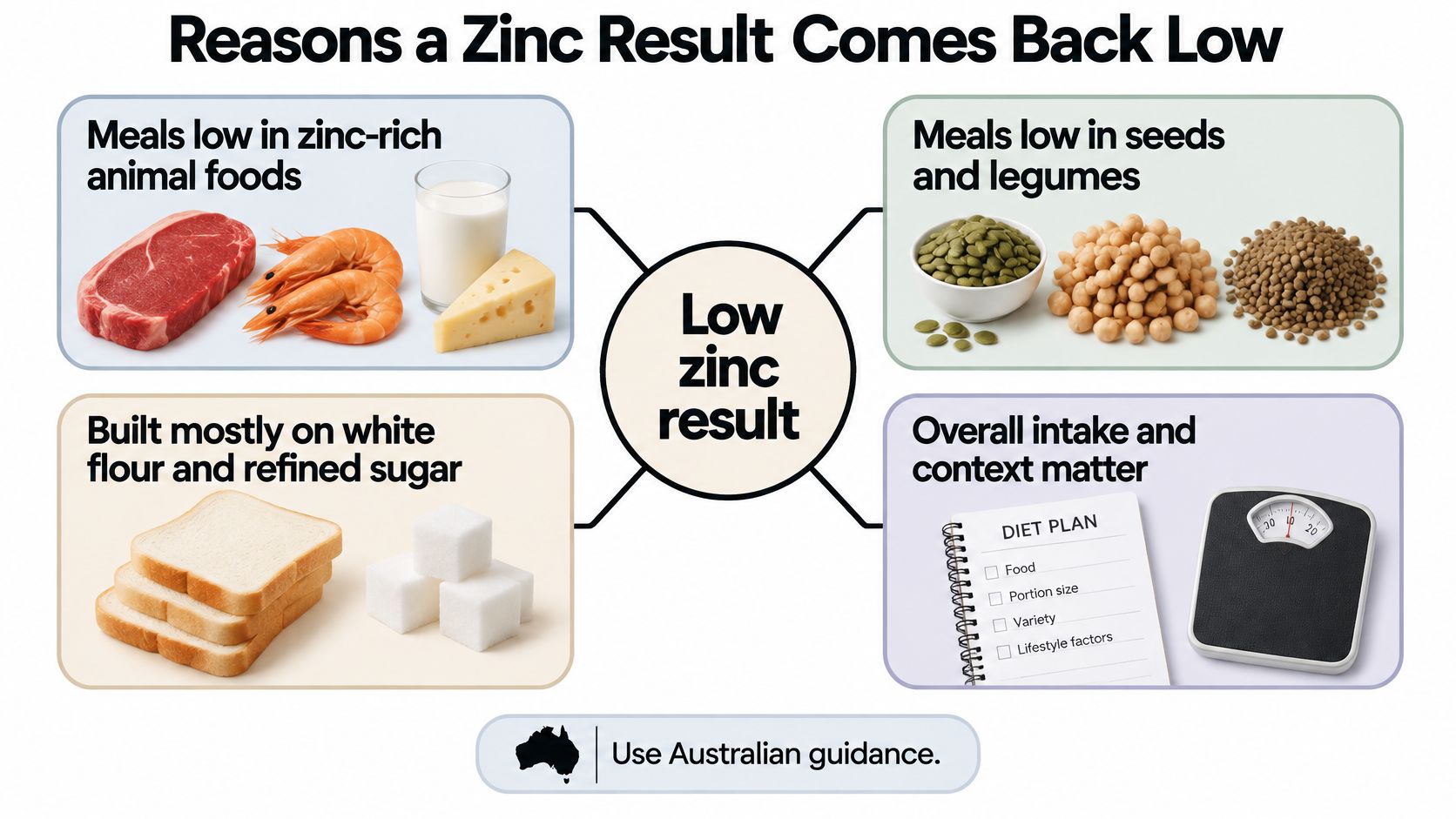
Sort the reasons into four buckets: supply, absorption, demand, and loss. A low result usually leans on one of them more than the others.
Supply
Supply is what reaches the plate. Meals low in meat, shellfish, dairy, seeds and legumes carry less zinc. A pattern built mostly on white flour and refined sugar carries less still. Australian usual-intake estimates put inadequacy below 5% among children aged 2–4 and 5–11 years, then show it rising in older groups, particularly adult males. From about age 14, many males have an estimated average requirement of 11–12 mg a day, compared with about 6–6.5 mg a day for many females, and those figures describe dietary inadequacy rather than confirmed biochemical deficiency, as set out by the Australian Bureau of Statistics. A teenager who drops meat and dairy, or an adult whose lunch is white bread and sweet drinks, can miss that higher male benchmark without ever feeling "on a diet".
Absorption
Absorption is the bucket people skip. Coeliac disease, inflammatory bowel disease, ongoing diarrhoea and gut surgery can leave blood zinc low even when the plate looks adequate. High-phytate meals, heavy on unleavened grains and some legumes, bind zinc in the gut so less of it crosses into the blood. The meal can look wholesome and still deliver a poor yield.
Demand
Demand rises when the body is building tissue. Adolescent growth, pregnancy and breastfeeding all lift the amount required. A result that was comfortable at 25 can sit lower in late pregnancy even if the menu barely changed. That isn't automatic failure. It's a bigger job for the same mineral.
Loss and blockers
Heavy alcohol use, some chronic illness, and mineral or medicine combinations that compete with zinc can pull the number down. Iron and calcium supplements taken at the same moment as a zinc-rich meal are a common, quiet example. An acute illness can also dip the number for a short time. The mechanics of that dip belong with the test itself, not with a permanent label of deficiency.
Which bucket fits you: not enough in, not absorbed, needed more, or being lost? If you can't tell, don't pick a dose to break the tie. Write down a typical day of food, any gut diagnosis, and every mineral tablet, and take that note to a clinician.
Why a Zinc Blood Test Can Mislead
Australian guidance is blunt about mild deficiency. Healthdirect notes that blood testing isn't very reliable for mild zinc deficiency, so a red number needs symptoms, diet, gut disease and medicines around it before anyone treats it as fact.
A report often omits the details that move the result. It may not show the time of day, whether you were fasting, or whether the sample was serum or plasma. Two "zinc" rows from different laboratories aren't automatically the same measurement.
Picture a river in flood. During infection or an acute-phase response, circulating zinc can fall as it shifts into tissues. The photo of the river looks low. That photo doesn't prove the body's stores are empty. The mineral has moved, not vanished. A draw taken during gastroenteritis, a chest infection or any obvious illness answers a different question from a draw taken when you're well and eating your usual diet.
Sample handling matters in plain terms too. A haemolysed tube, delayed processing and zinc contamination from the collection gear can nudge a result up or down. You can't see those problems on the PDF. The laboratory can.
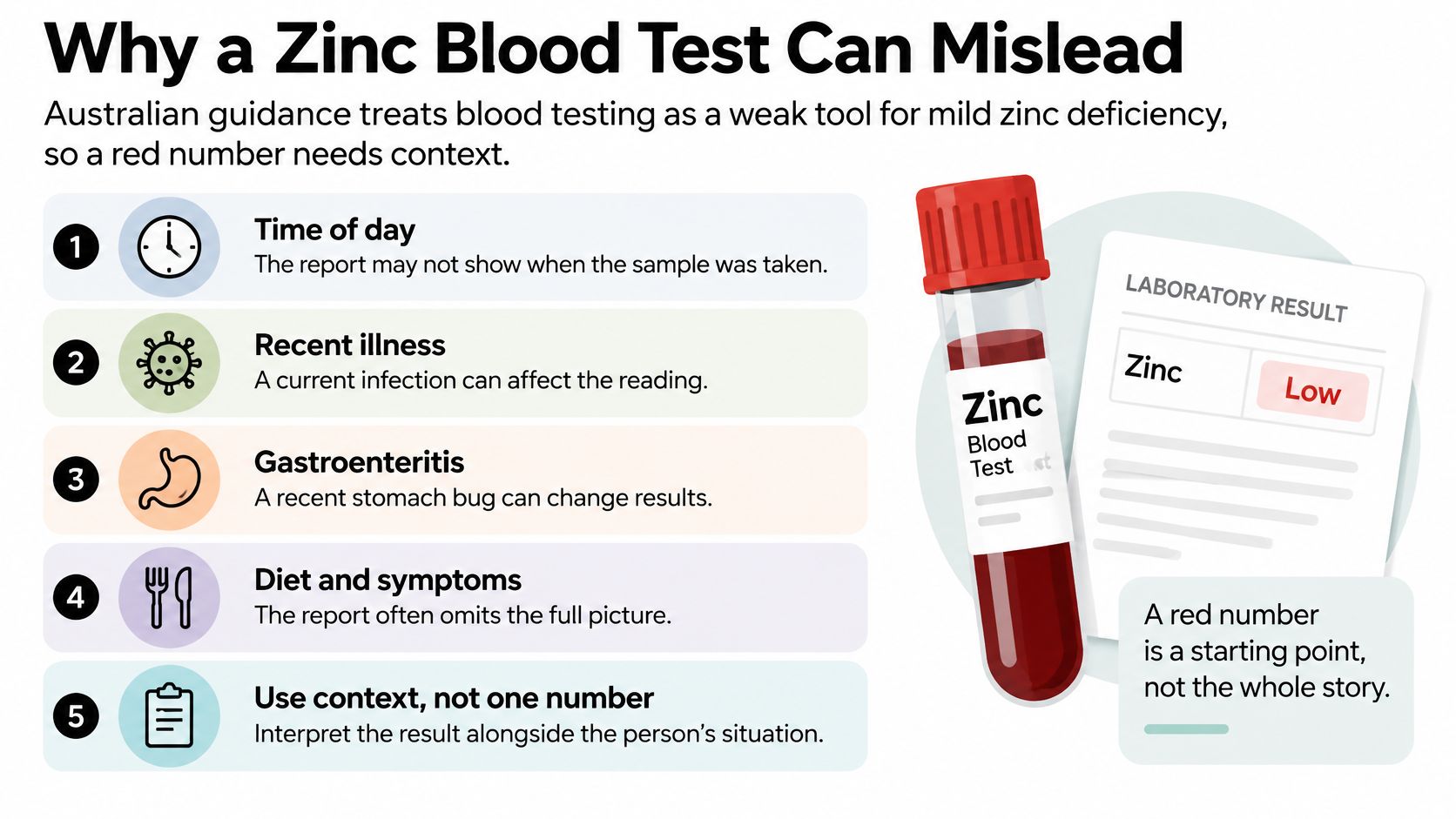
What to tell a clinician before the result is believed
- Current products: Multivitamins, zinc lozenges and separate mineral tablets, including the dose on the label.
- Recent infection: Anything in the fortnight before the needle, including a short stomach bug.
- Eating pattern: Vegetarian or vegan meals, and whether phytate-rich foods dominate the day.
- Life stage: Pregnancy or breastfeeding, which change how much zinc you need.
- Known gut disease: Coeliac disease, inflammatory bowel disease, or surgery that shortens absorption.
A clinician may look at an inflammation marker such as C-reactive protein when they ordered it. A high marker next to a low zinc line supports the flood picture. It doesn't cancel a real shortage, and a normal marker doesn't prove the zinc line is perfect. The same habit of reading one hormone in isolation shows up in cortisol testing in Australia. Context decides whether the number is a finding or a snapshot of a bad week.
A repeat is for a clinical question, not for every printout that looks low.
Where Low Zinc Has Shown Up
Low measured zinc isn't a new Australian finding, and it hasn't meant the same thing in every group.
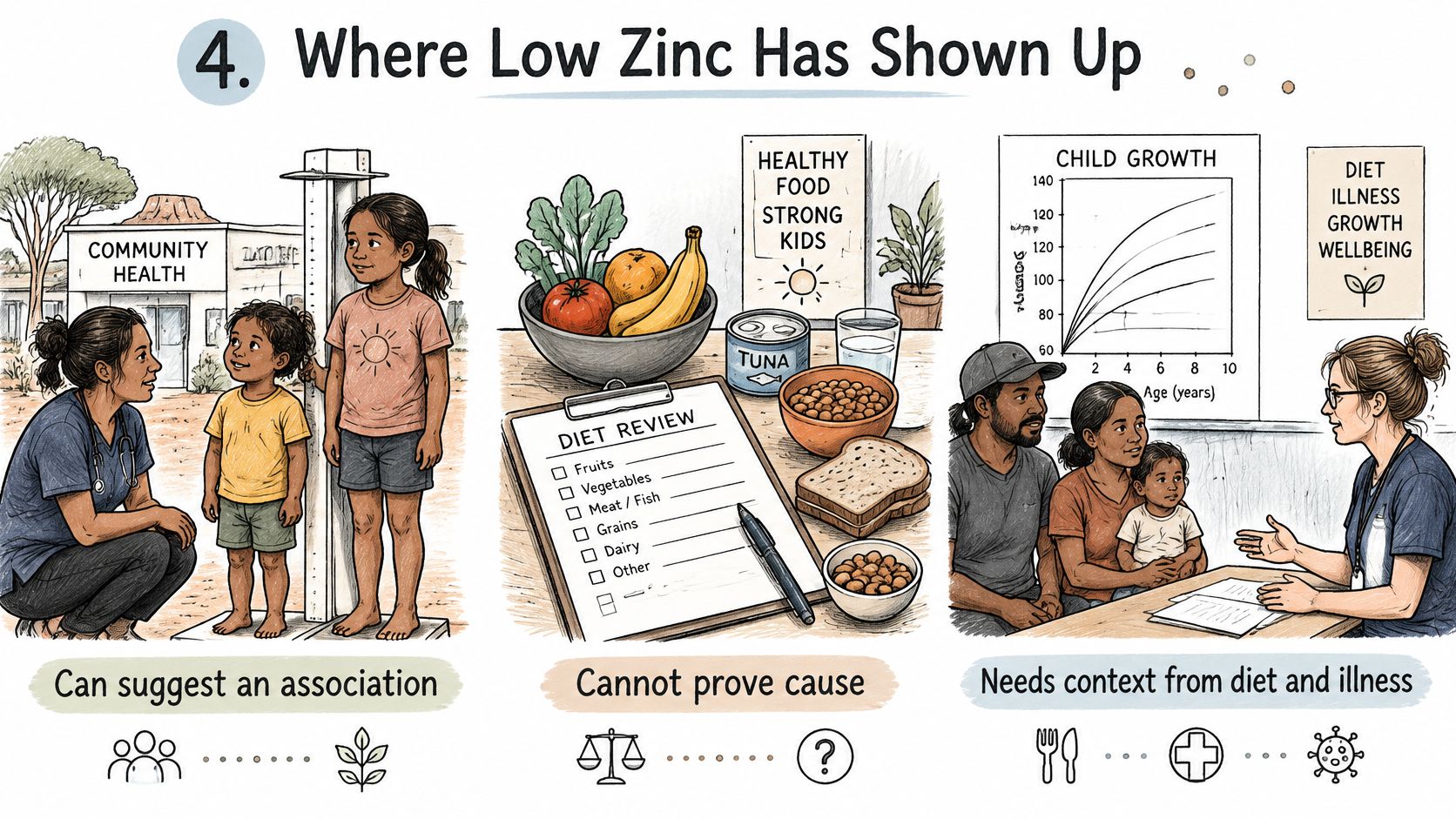
Growing children in one older study
A foundational biochemical study assessed 364 Aboriginal participants aged 5 to 77 years in two communities in north-western Australia. Hypozincemia, defined as serum or plasma zinc below 0.71 micrograms per millilitre, affected 24.4% overall. In children aged 10–15, a rapid growth window, it was about 31% to 67%. Diets were described as predominantly based on white flour and refined sugar. That study, published in the American Journal of Clinical Nutrition, can show that low measured zinc has occurred at clinically meaningful levels during growth. It can't give you today's national prevalence, and it can't diagnose a child from a different place and a different menu.
Older women in the same communities
In that same investigation, roughly 33% to 64% of women aged over 60 met the low-zinc cut-off. Lower intake, illness and poorer absorption can stack at that age. Hypercupremia was also found in 47.9% of participants across the communities. High copper beside low zinc is a pairing to notice, not a treatment plan. These figures are historical and local. They are not a current national rate, and they don't say that every Australian woman over 60 has low zinc levels.
Skin change, poor appetite and altered taste were among the deficiency features that older work considered. They still need a clinician. They overlap with plenty of other conditions, so they colour the history. They don't close it.
Adult men and today's diet pattern
The third picture is different in kind. After childhood, inadequate zinc intake is common among Australian males. That is a food pattern. It isn't the same thing as a low blood test, and it doesn't mean a man with a normal report is deficient, or that a man with a low report only needs a bigger steak.
The lesson is that the same low number prompts a different next question. In a growing teenager, ask about growth and the quality of the diet. In an older woman, ask about intake, illness and absorption together. In an adult man with a thin diet, ask whether the plate meets a higher requirement before anyone reaches for a supplement.
Checks and Next Steps Before Any Supplement
A low zinc result is a starting point for a few checks, not a dose by itself. Review the report's reference range, units and date, then consider whether illness around the time of the test could have affected the reading. The Royal Children's Hospital micronutrient guidance notes that excess zinc can cause copper deficiency and recommends follow-up measurement during treatment in children. Its dosing advice is for children, so adults should discuss supplementation and follow-up testing with a clinician.
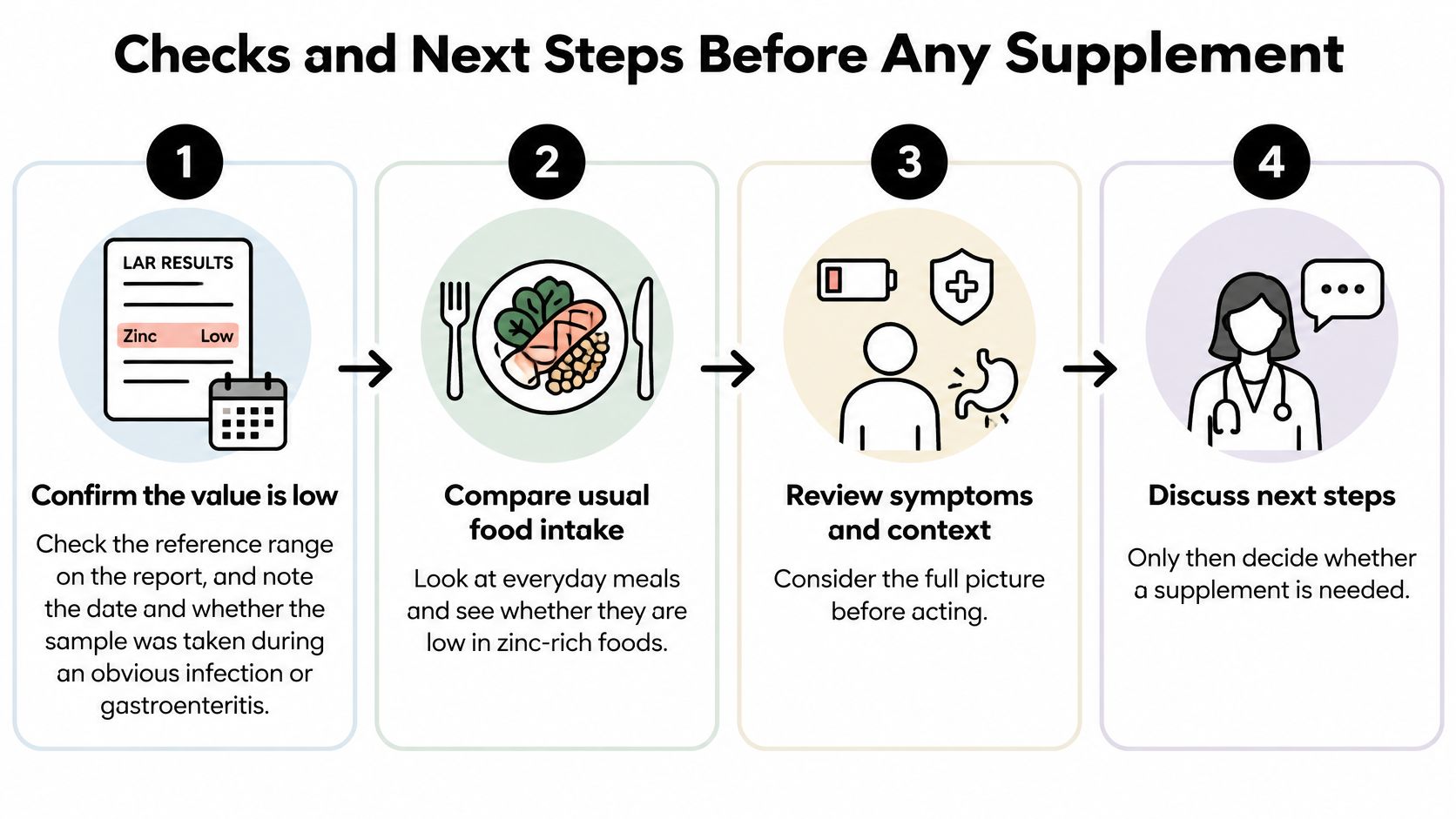
Check the result's context. Compare it with the reference range on the report, and note the units and collection date. Recent infection or gastroenteritis may matter when interpreting a single result.
Review your usual food intake. A record of meals can help show whether zinc intake is consistently low. Fatigue or altered taste may be relevant symptoms, but they cannot identify the cause on their own.
Consider absorption and ongoing illness. Coeliac disease, inflammatory bowel disease and other causes of malabsorption can affect zinc levels. Persistent vomiting or diarrhoea warrants medical review rather than a supplement trial.
Discuss treatment and follow-up with a clinician. If deficiency is confirmed, a clinician can advise whether supplementation is appropriate, how to take it and whether repeat testing is needed.
Ask about copper if using higher-dose zinc. Excess zinc can interfere with copper status and may cause nausea, vomiting or diarrhoea. The dose and duration both matter when discussing possible risks.
Add up zinc across products. Lozenges, multivitamins and powders can all contribute. Check each label so a clinician can review the total alongside your diet and test result.
Keep a written note of the result, units, date, any recent illness and the labelled zinc amounts in products you use. Take it to a GP or telehealth GP before changing your intake. Vital iQ Health's Vitamins & Mineral Panel assesses essential vitamins, minerals and antioxidants, and customers can build a private blood test from over 300 individual biomarkers. Results are delivered within 24–72 hours. A full body checkup cost comparison can help explain testing options, while a clinician can help interpret what a result means for you.
Vital iQ Health offers private blood testing and pathology panels through online ordering and accredited collection centres. Its Vitamins & Mineral Panel assesses nutritional markers, and partnered telehealth GPs can help explain results and discuss possible next steps. A low zinc result still needs to be considered alongside diet, illness, absorption and copper status before any supplement decision.